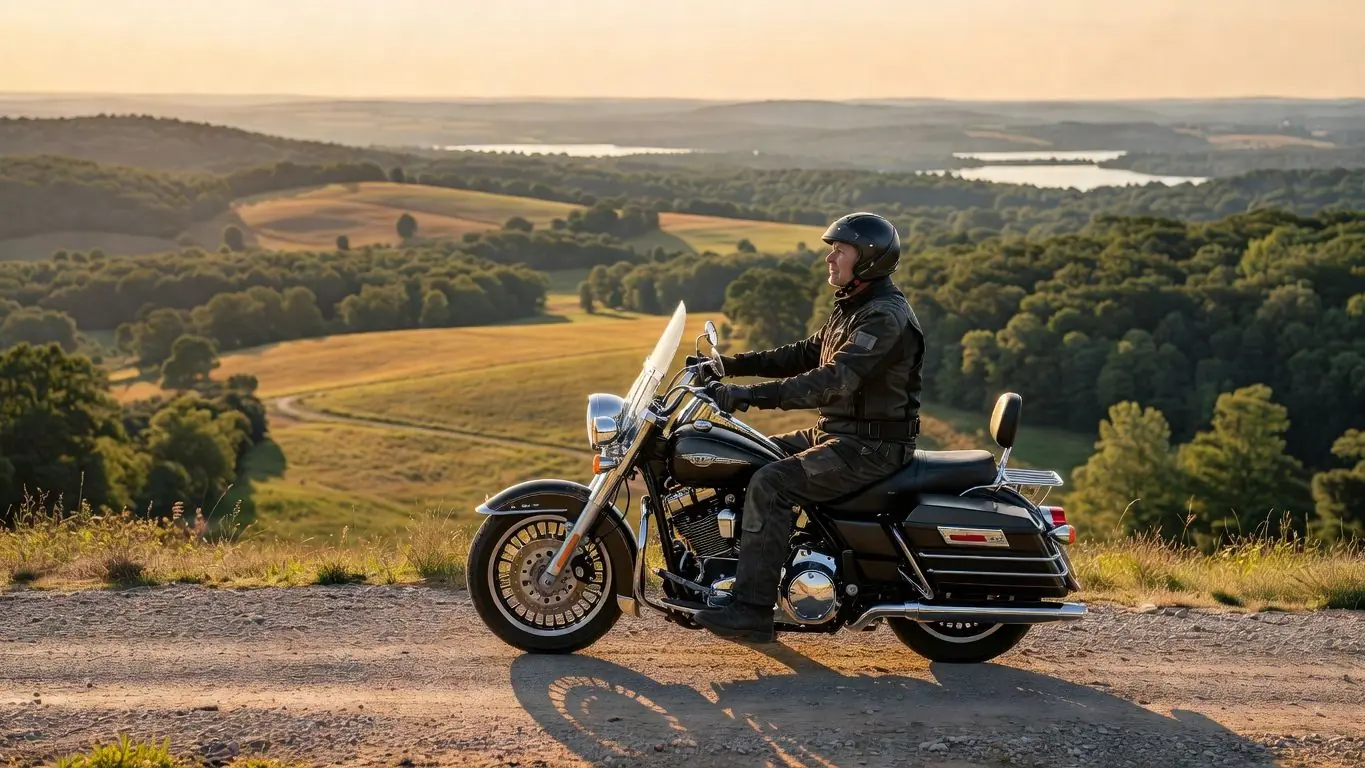
To obtain a motorcycle endorsement in Indiana, applicants must pass a written knowledge test consisting of 25 multiple-choice questions, achieving a passing score of at least 20 correct answers (80%). The minimum age to apply for a motorcycle permit is 16 years old. While the time limit for the exam varies by testing center, the permit itself is valid for 365 days. Successfully passing the written test is only the first step; a mandatory skills test is required to upgrade from a permit to a full motorcycle endorsement. All candidates should study the official guidelines provided by the American Association of Motor Vehicle Administrators (AAMVA) and the Indiana Bureau of Motor Vehicles to ensure compliance with safety standards and traffic laws.
What's on the Indiana motorcycle test
The Indiana motorcycle knowledge test is designed to evaluate a rider's understanding of safe operating procedures, traffic laws specific to motorcycles, and hazard recognition. The exam consists of exactly 25 multiple-choice questions. To pass, you must answer at least 20 questions correctly, which represents an 80% passing threshold. The questions are drawn directly from the state's motorcycle operator manual and cover a wide array of critical topics. These include proper hand signals, right-of-way rules, lane positioning strategies, and the unique physics of two-wheeled vehicles. Candidates will be tested on how to handle various road conditions, such as wet pavement, gravel, and uneven surfaces, as well as the correct procedures for braking and turning. Furthermore, the test assesses knowledge of alcohol and drug laws, the importance of protective gear, and the legal requirements for carrying passengers. Understanding the difference between a motorcycle permit and a full endorsement is also a potential topic. The test is not merely a memory exercise; it is a safety assessment intended to ensure that new riders possess the theoretical foundation necessary to operate a motorcycle safely in Indiana's diverse traffic environment.
Eligibility and permit duration
Before scheduling your knowledge test, it is essential to verify that you meet the specific eligibility criteria set forth by the Indiana Bureau of Motor Vehicles. The minimum age to apply for a motorcycle permit in Indiana is 16 years old. Applicants under the age of 18 must typically have parental or guardian consent and may be subject to additional restrictions regarding riding hours and passenger carriage. Once you have passed the written examination, you will be issued a motorcycle permit. This permit is valid for a period of 365 days from the date of issuance. During this one-year window, you are legally allowed to operate a motorcycle on public roads, but only under strict supervision. You must be accompanied by a licensed motorcycle rider who is at least 21 years old and seated on a separate motorcycle or in a sidecar. The permit does not allow you to carry passengers or ride at night in some jurisdictions, though specific Indiana restrictions should be verified at the time of issuance. It is crucial to note that the permit is a temporary credential; it is not a substitute for the full endorsement. If you do not complete the required skills test and upgrade your license within the 365-day validity period, you will likely need to retake the written examination and pay the associated fees again. This time limit is designed to encourage riders to progress from the learning phase to full competency without unnecessary delay.
Required gear and helmet laws
Safety equipment is a primary focus of both the Indiana motorcycle test and the state's traffic laws. While Indiana does not have a universal helmet law for all riders, the test heavily emphasizes the importance of wearing a Department of Transportation (DOT) approved helmet. Riders under the age of 21 are legally required to wear a helmet, as are those holding a motorcycle permit regardless of age. The knowledge test will likely include questions regarding the proper fit and certification standards of helmets. Beyond head protection, the exam covers the necessity of eye protection, such as goggles or a face shield, to prevent debris from causing accidents. Candidates are also tested on the benefits of wearing protective clothing, including long-sleeved shirts, long pants, and over-the-ankle boots. The test material often references the AAMVA guidelines, which highlight that proper gear significantly reduces the severity of injuries in the event of a crash. The federal guidance documents note that reducing crashes and enhancing rider safety are central goals of the licensing framework. Therefore, understanding the legal requirements and the practical safety benefits of gear is not just about passing the test; it is about adhering to a safety culture that prioritizes rider survival and injury prevention. Failure to comply with these gear laws can result in fines and points on your driving record, which can impact your insurance rates and license status.
From permit to Motorcycle endorsement endorsement
Transitioning from a motorcycle permit to a full motorcycle endorsement is a two-step process that ensures a rider is both knowledgeable and skilled. The first step, as detailed above, is passing the written knowledge test to obtain the permit. However, the permit alone does not grant full riding privileges. The second, and equally critical, step is passing the on-cycle skills test. This practical examination is required for all applicants seeking the full endorsement. The skills test evaluates your ability to control the motorcycle in real-world scenarios. Examiners will assess your ability to perform basic maneuvers such as starting and stopping, turning, swerving, and braking effectively. You will be tested on your ability to maintain balance at low speeds, navigate through a slalom course, and execute emergency stops. The test also checks your ability to scan the environment, use mirrors correctly, and signal intentions to other drivers. Unlike the written test, which can be taken at a BMV branch or online in some cases, the skills test usually requires an appointment at a designated testing site or through a certified motorcycle safety course. Successfully completing the skills test demonstrates that you can apply the theoretical knowledge gained from the permit phase to actual riding situations. Once you pass both the written and skills tests, the permit is upgraded to a full motorcycle endorsement, allowing you to ride without supervision, carry passengers, and operate at all times, provided you adhere to all other traffic laws.
Common pitfalls
Many applicants fail the Indiana motorcycle permit test or the subsequent skills test due to avoidable mistakes. One of the most common pitfalls is underestimating the difficulty of the written exam. While 25 questions may seem manageable, the 80% passing score means you can only miss five questions. Many candidates fail because they rely on general driving knowledge rather than studying the specific nuances of motorcycle operation. Another frequent error is neglecting the study of the AAMVA guidelines and the specific Indiana motorcycle handbook. The test questions often focus on specific scenarios, such as how to handle a tire blowout or the correct way to negotiate a curve, which require precise knowledge rather than intuition. Additionally, some riders fail to understand the limitations of their permit, attempting to carry passengers or ride at night before they are legally allowed to do so, which can lead to legal trouble and the revocation of their permit. On the skills test, a common pitfall is poor body positioning. Riders often lean their bodies incorrectly or fail to look through the turn, leading to balance issues. Another significant mistake is failing to perform a proper pre-ride inspection. Examiners expect candidates to check tire pressure, fluid levels, and chain tension before starting the engine. Finally, many riders overlook the importance of the time limit. While the time limit for the written test varies, rushing through the questions can lead to careless errors. It is essential to read each question carefully and manage your time effectively to ensure you have enough time to review your answers.
How to study in 5 days
Preparing for the Indiana motorcycle permit test in just five days is achievable with a structured and disciplined study plan. The key is to focus on high-yield topics and practice with realistic questions. Day 1 should be dedicated to reading the entire motorcycle handbook and the AAMVA guidelines. Focus on understanding the core concepts of motorcycle physics, traffic laws, and safety gear requirements. Take notes on key statistics and specific rules that differ from car driving. Day 2 involves taking practice tests. Use online resources or study guides to simulate the exam environment. Aim to take at least two full-length practice tests, reviewing every incorrect answer to understand why it was wrong. Day 3 should focus on weak areas identified during the practice tests. If you struggled with questions about braking distances or lane positioning, spend extra time reviewing those sections. Create flashcards for specific terms and regulations. Day 4 is for reinforcement. Review your flashcards and take another practice test to gauge your progress. Ensure you are consistently scoring above 80% on these practice exams. Day 5 is for final review and relaxation. Go over your notes one last time, focusing on the most critical safety rules. Avoid cramming new information at the last minute, as this can increase anxiety. Instead, ensure you are well-rested and mentally prepared for the test. By following this five-day plan, you will build a solid foundation of knowledge that will help you pass the written test and prepare you for the skills test that follows.