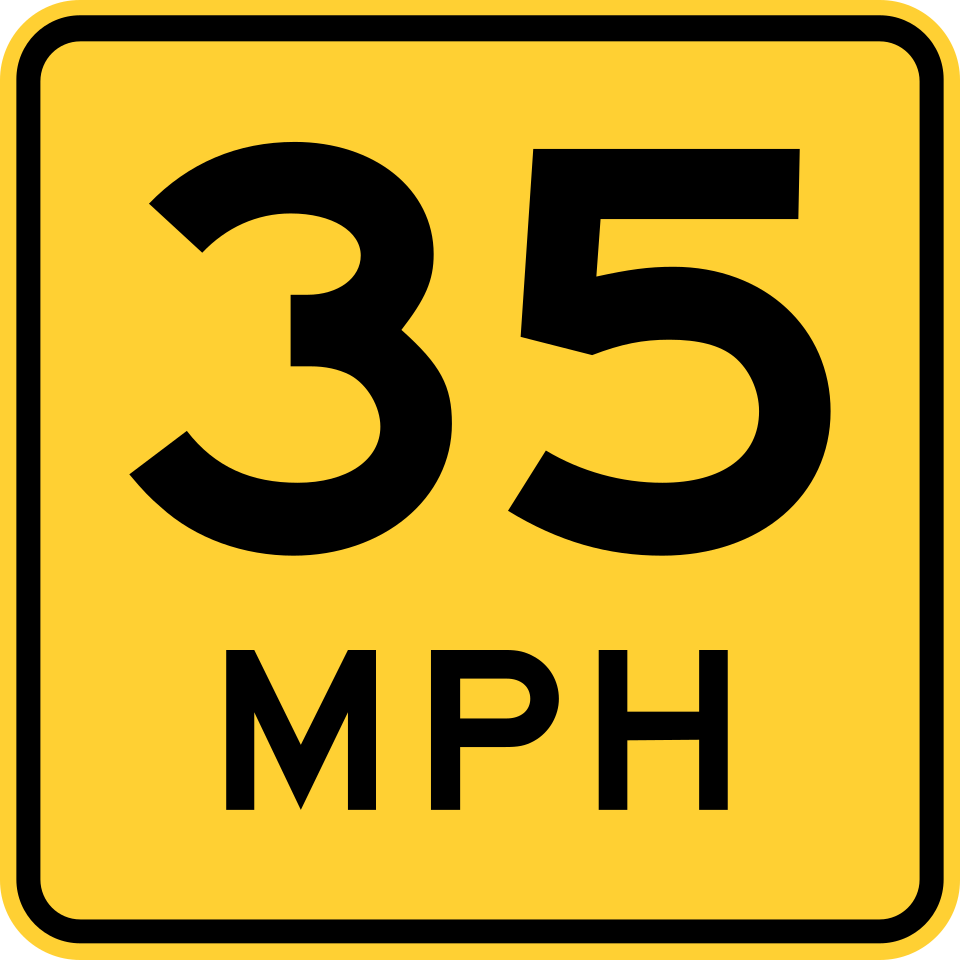
Understanding the Advisory Speed Limit Sign: A Guide for Learner Drivers
The Advisory Speed Limit sign is a distinctive yellow diamond-shaped plaque, often mounted directly beneath a warning sign or a curve symbol. Unlike standard white regulatory speed limit signs that display a maximum legal speed, this sign features black text on a yellow background, typically reading "SPEED LIMIT XX" or simply "XX MPH." Its primary purpose is not to set a legal maximum but to recommend a safe speed for navigating a specific hazard, such as a sharp curve, a steep downgrade, or a complex interchange ramp. For learner drivers, recognizing this sign is critical because it signals a need to adjust speed based on road geometry and conditions rather than just obeying a statutory limit. While ignoring a standard speed limit sign results in a traffic citation, ignoring an advisory sign can lead to loss of vehicle control, making it a vital component of defensive driving education.
What it means
Formally, the Advisory Speed Limit sign is a supplementary plaque used in conjunction with warning signs to indicate the maximum safe speed for a specific roadway feature under ideal conditions. In the context of the Manual on Uniform Traffic Control Devices (MUTCD), these signs fall under the category of warning sign supplements rather than strict regulatory signs, although they carry significant weight in determining safe driving behavior. The sign does not establish a legal speed limit in the same way a white rectangular sign does; instead, it provides engineering data derived from tests conducted by traffic engineers to determine the speed at which a vehicle can safely traverse a curve or hazard without losing traction or stability.
For the driver, the action required is immediate and proactive. Upon seeing this sign, a learner must recognize that the posted speed limit for the general roadway is no longer the appropriate speed for the immediate section of the road. If the advisory sign reads "25 MPH" beneath a curve warning, the driver must reduce their speed to 25 miles per hour or lower before entering the curve, regardless of whether the general speed limit is 45 or 55 mph. The sign implies that exceeding the recommended speed increases the risk of skidding, rollover, or running off the road, particularly for heavy vehicles or in adverse weather conditions. It is a recommendation based on physics and road design, serving as a crucial safety buffer for drivers who may not intuitively understand the severity of a curve or ramp.
Where you'll see it
Advisory speed signs are strategically placed where road geometry changes significantly or where specific hazards require a reduction in speed that differs from the posted limit. The most common placement is directly below a yellow diamond-shaped warning sign indicating a curve, turn, or winding road. You will frequently encounter them on highway exit ramps and entrance ramps, where the curvature is tight enough to require speeds well below the highway's mainline speed. For instance, a driver traveling at 65 mph on an interstate may see an advisory sign of "35 MPH" on the exit ramp, signaling the need to brake early and significantly.
Other typical locations include steep downgrades where gravity can cause vehicles to accelerate uncontrollably, sharp intersections with limited visibility, and areas with complex merging patterns. They are also common in construction zones where temporary curves or lane shifts have been introduced. In rural areas, these signs are often found on winding mountain roads or near sharp bends that are not immediately obvious to the driver. The placement is always designed to give the driver sufficient time to react and adjust their speed before reaching the hazard. It is important to note that these signs are often accompanied by a "W1-1" (Curve) or "W1-2" (Turn) symbol, reinforcing the need for caution.
What to do when you see it
When a learner driver encounters an Advisory Speed Limit sign, the correct response involves a sequence of actions focused on speed management and vehicle control. First, acknowledge the sign immediately and assess the current speed of the vehicle. If the vehicle is traveling faster than the advisory speed, begin braking smoothly and early. Abrupt braking while entering a curve can cause weight transfer that destabilizes the vehicle, so the goal is to reach the recommended speed before the curve begins.
Second, maintain the advisory speed throughout the hazard. Do not accelerate until the road straightens out and the hazard has passed. It is a common mistake for drivers to slow down for the curve but then accelerate too early, which can still lead to loss of control. Third, increase following distance. If you are following another vehicle, ensure you have ample space to react if the vehicle ahead slows down unexpectedly or loses traction. Finally, be prepared for varying conditions. The advisory speed is calculated for ideal conditions (dry pavement, good visibility). If it is raining, snowing, or foggy, the safe speed may need to be even lower than the sign suggests. The sign is a baseline for safety, not a target to be hit regardless of the weather.
Common pitfalls
Learner drivers often fall into several traps when dealing with advisory speed signs. The most dangerous misconception is believing that the sign is merely a suggestion that can be ignored if the weather is good. While technically a recommendation, exceeding the advisory speed on a sharp curve is a leading cause of single-vehicle accidents, particularly rollovers. Drivers often confuse the advisory speed with the legal speed limit, thinking they can legally drive at the posted limit even if the sign says otherwise. This confusion can lead to dangerous driving behaviors where the driver maintains a high speed through a curve, relying on the car's stability rather than the physics of the turn.
Another common error is braking too late. Learners often wait until they are already in the curve to see the sign and then slam on the brakes. This shifts the vehicle's weight forward, reducing traction on the rear tires and increasing the likelihood of a skid. The correct technique is to brake in a straight line before the curve. Additionally, some drivers fail to adjust for vehicle type. A large truck or an SUV with a high center of gravity may need to travel significantly slower than the advisory speed, especially in wet conditions, whereas a low-slung sports car might handle the curve at the recommended speed more easily. Ignoring the vehicle's specific limitations is a critical pitfall.
Permit-test context
On the learner's permit written test, questions regarding the Advisory Speed Limit sign are designed to test the candidate's understanding of the difference between regulatory and warning signs. You may be shown an image of a yellow diamond sign with a speed limit plaque below it and asked what the sign means. The correct answer will always emphasize that the sign indicates a safe speed for a specific hazard, not a legal maximum. Test questions often present scenarios, such as "You see a sign indicating a 25 mph advisory speed on a curve. The posted speed limit is 55 mph. What should you do?" The correct response is to slow down to 25 mph or less before entering the curve.
Examiners also look for an understanding of the consequences of ignoring the sign. Questions may ask about the risks associated with exceeding the advisory speed, such as losing control of the vehicle or rolling over. It is crucial to remember that while the sign is not a "law" in the strict sense of a speed limit statute, it is a critical safety instruction. Failing to heed an advisory speed sign is often cited in accident reports as a contributing factor, and in some jurisdictions, driving at an unsafe speed for conditions (which includes ignoring advisory signs) can lead to citations under "basic speed laws." Therefore, treating the advisory speed as a mandatory limit for safety is the best strategy for both the test and real-world driving.