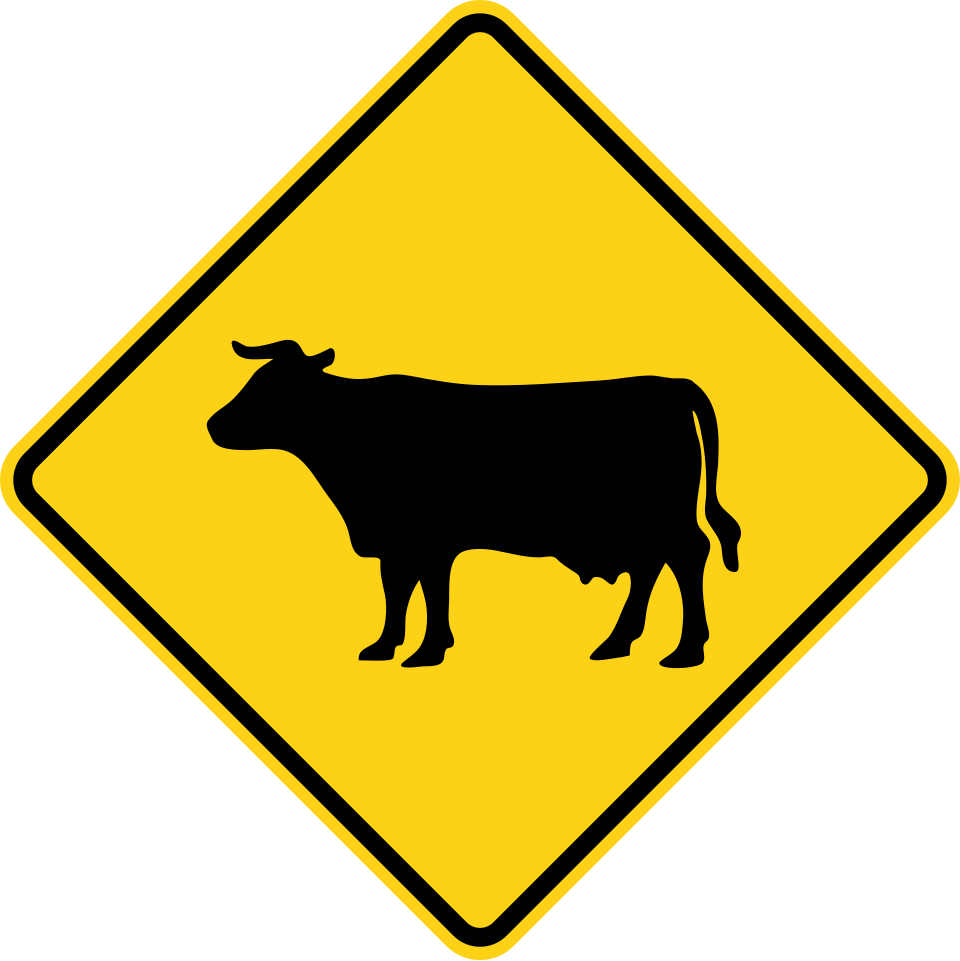
If you are a learner driver studying for your permit test, you may have encountered a confusing piece of trivia or a meme suggesting the existence of a specific "Animal Crossing Cattle Road Sign" that looks like a video game icon. It is crucial to clarify a fundamental misunderstanding right from the start: there is no official traffic sign in the United States Manual on Uniform Traffic Control Devices (MUTCD) known as the "Animal Crossing Cattle Road Sign" from the video game Animal Crossing. The video game features a whimsical, cartoonish sign with a cow silhouette on a yellow background, but this is a piece of digital art, not a regulatory traffic device. In the real world, the sign you are likely thinking of is the standard "Cattle Crossing" warning sign (W11-1). This article will guide you through the actual appearance, meaning, and legal requirements of the real-world cattle crossing sign, ensuring you are prepared for your driving test and safe on the road, while dispelling the confusion caused by pop culture references.
What It Means
In the official lexicon of the Manual on Uniform Traffic Control Devices (MUTCD), the sign often confused with the "Animal Crossing" icon is technically designated as the Cattle Crossing sign (W11-1). Unlike the playful, square, yellow sign found in the Nintendo game, the real-world version is a diamond-shaped warning sign with a yellow background and a black border. The symbol in the center depicts a black silhouette of a cow, typically shown in profile, walking or standing. The meaning of this sign is strictly advisory and cautionary. It does not carry the weight of a regulatory command like a Stop sign or a Speed Limit sign. Instead, it serves as a warning to drivers that they are entering an area where cattle may frequently cross the roadway. This could be due to open grazing lands, nearby ranches, or migratory paths used by livestock. The sign indicates a potential hazard that requires the driver to increase their level of alertness. From a legal and safety perspective, the presence of this sign means you must be prepared to slow down, stop, or maneuver safely if cattle are present on or near the road. In many rural jurisdictions, livestock on the roadway are considered a natural hazard, and drivers are expected to exercise "due care" to avoid collisions. While the sign itself does not mandate a specific speed reduction, the implied action is to adjust your driving behavior to the conditions. If you see a cow on the road, the law generally requires you to yield right-of-way to the animal, as hitting livestock can cause severe vehicle damage, injury to the driver, and significant financial liability for the owner of the animal.
Where You'll See It
The Cattle Crossing sign (W11-1) is exclusively found in rural and semi-rural environments. You will not encounter this sign in dense urban centers, suburban neighborhoods, or on major interstate highways where livestock are prohibited. Typical placement contexts include:
- Rural Highways: Two-lane roads that pass through agricultural zones, ranches, or open range areas.
- County Roads: Local roads that connect farms to main thoroughfares, often lacking median barriers.
- Seasonal Migration Routes: Areas where cattle are moved between pastures during specific times of the year, such as spring and fall.
- Proximity to Fenced Pastures: Sometimes placed near breaks in fencing or gates where animals might accidentally wander onto the pavement.
What to Do When You See It
When a learner driver encounters the Cattle Crossing sign, the immediate action is to shift from passive driving to active scanning. The sign is a trigger for heightened situational awareness. Here is the step-by-step protocol for handling this situation:
- Reduce Speed: Even if the road is clear, slow down slightly. Cattle are unpredictable; they may freeze in the middle of the road, run in erratic patterns, or be startled by your vehicle's noise.
- Scan the Road Edges: Look beyond the pavement to the shoulders and ditches. Cattle often walk along the edge of the road before stepping onto it. Watch for movement in the tall grass or trees.
- Prepare to Stop: Keep your foot hovering over the brake pedal. If you see an animal, do not attempt to honk aggressively, as this may cause the animal to bolt into traffic. Instead, come to a controlled stop and wait for the animal to clear the road.
- Use Low Beams at Night: If driving at night, use low beams. High beams can blind animals or cause them to freeze in the headlights, making them harder to avoid. However, ensure you can see the animal's eyes reflecting light.
- Do Not Swerve: If a collision seems imminent, it is often safer to brake firmly and stop rather than swerve. Swerving on rural roads can lead to losing control, rolling over, or hitting other obstacles like trees or fences.
Common Pitfalls
Learner drivers often make specific mistakes when dealing with livestock crossing signs, largely due to the influence of video games or a lack of rural driving experience. The most common pitfall is confusing the video game aesthetic with reality. In Animal Crossing, the sign is a cheerful, square yellow sign with a cute cow. Real drivers who expect this specific design may miss the actual diamond-shaped W11-1 sign, leading to a failure to recognize the hazard. Another major error is underestimating the size and weight of cattle. Unlike deer, which are agile and can jump, cattle are heavy, slow-moving, and often confused by vehicles. Drivers sometimes try to "rush" past a cow, thinking it will move quickly. This is dangerous; cattle may simply stand their ground. Additionally, learners often fail to yield right-of-way. In many states, the law explicitly states that drivers must yield to livestock on the roadway. Failing to stop for a cow can result in a traffic citation for "failure to yield" or "unsafe driving," in addition to the civil liability for the damage to the animal. Finally, some drivers ignore the sign after a few miles. If you see the sign and don't see a cow for ten minutes, you might relax. However, the sign often covers a long stretch of road. Complacency is the enemy of safety in these zones.
Permit-Test Context
On your driver's permit test, you will likely encounter questions regarding the Cattle Crossing sign, but you must be careful to distinguish between the real sign and the game reference. The test will almost certainly show the standard diamond-shaped yellow sign with a black cow silhouette. Questions may ask:
- "What does this sign mean?" The correct answer is "Cattle may cross the road" or "Warning: Livestock crossing."
- "What should you do when you see this sign?" The answer involves slowing down, being alert, and preparing to stop.
- "Is this a regulatory sign?" The answer is no; it is a warning sign. It does not impose a fineable offense by itself, but it sets the context for liability if an accident occurs.