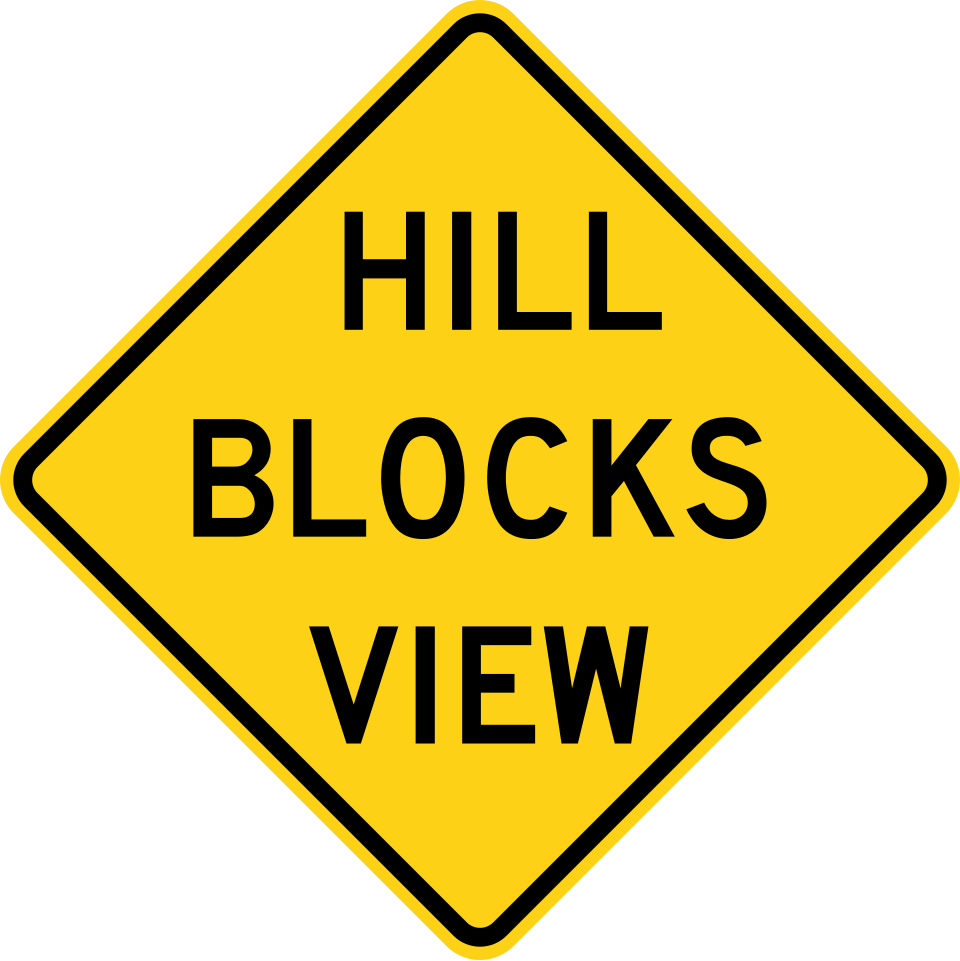
Mastering the Blind Driveway Sign: A Guide for New Drivers
For learner drivers navigating the complex web of American roadways, recognizing the subtle yet critical Blind Driveway warning sign is a fundamental skill. Unlike the bold red octagon of a stop sign or the yellow diamond of a general warning, the Blind Driveway sign is a specific regulatory and warning hybrid designed to alert motorists to a hidden hazard. Visually, it typically presents as a yellow diamond-shaped sign featuring a black silhouette of a vehicle emerging from a driveway, often accompanied by the text "BLIND DRIVEWAY" or a similar descriptor. The color scheme—standard yellow for warnings with black text and symbols—ensures high visibility during both day and night. Its primary meaning is straightforward: the driver is approaching an intersection or driveway where the line of sight is obstructed, making it impossible to see oncoming traffic, pedestrians, or cyclists until they are dangerously close. This sign serves as a crucial early warning system, demanding heightened situational awareness and a proactive reduction in speed to prevent collisions in areas where visibility is compromised.
What It Means
Formally, the Blind Driveway sign indicates the presence of a driveway or private road entrance where the driver's view of cross traffic is significantly restricted by physical obstructions. These obstructions can include tall hedges, fences, parked vehicles, building structures, or the natural curvature of the road itself. In the context of the Manual on Uniform Traffic Control Devices (MUTCD), while there is no single sign code exclusively labeled "Blind Driveway" in the standard W-series, this concept is often communicated through the W11-15 sign (Side Road) or specific local variations that include the text "BLIND DRIVEWAY" to emphasize the lack of visibility. The sign acts as a regulatory cue, shifting the legal and safety responsibility entirely onto the approaching driver.
The required driver action is immediate and decisive. Upon seeing this sign, a driver must assume that a vehicle or pedestrian could emerge from the blind spot at any moment. The standard driving protocol dictates that you must slow down significantly, often to a crawl, and be prepared to stop completely. You are not required to stop if the way is clear, but you are legally and ethically obligated to proceed with extreme caution. The sign effectively negates the assumption of right-of-way; even if you have the legal right to proceed on the main road, the physical reality of the blind spot means you must yield to any hazard that appears. It is a command to scan, slow, and prepare for the unexpected.
Where You'll See It
Blind Driveway signs are strategically placed in environments where the geometry of the road or the surrounding infrastructure creates a visual barrier. You will most commonly encounter these signs in residential neighborhoods where large, manicured hedges or privacy fences line the property boundaries, blocking the view of driveways. They are also prevalent in commercial districts where large buildings, loading docks, or parked delivery trucks obscure the entrance to side streets or alleys. Rural areas present another common context, particularly where winding roads approach farm entrances or where vegetation has overgrown the roadside, hiding the mouth of a driveway.
Placement is critical for the sign's effectiveness. It is typically installed well in advance of the hazard—usually 100 to 250 feet before the blind driveway, depending on the speed limit of the road. This distance allows a driver traveling at the posted speed enough time to perceive the sign, process the information, and decelerate safely. In some jurisdictions, the sign may be accompanied by a supplementary plaque reading "AHEAD" or "NEXT INTERSECTION" to further clarify the location of the hazard. You might also see these signs paired with flashing yellow lights or convex mirrors installed at the driveway itself, creating a multi-layered safety system designed to compensate for the lack of natural visibility.
What to Do When You See It
When your eyes catch the yellow diamond of the Blind Driveway sign, your driving strategy must shift instantly from passive cruising to active defense. The first step is to lift your foot off the accelerator and cover the brake pedal. This "covering the brake" technique reduces reaction time should a car suddenly pull out. Next, you must actively scan the area. Do not just look straight ahead; move your eyes to the left and right, looking for the edges of the obstruction, the tops of hedges, or any movement that might indicate a vehicle approaching the intersection.
Speed management is the most critical component of your response. You should reduce your speed to a level where you can stop within the distance you can see to be clear. If the obstruction is severe, this might mean slowing to 10 or 15 mph. As you approach the driveway, lean slightly forward if necessary to improve your angle of vision, and listen for the sound of an engine or tires. If the view remains completely blocked even after slowing down, you may need to perform a "creep and peek," inching your vehicle forward until you have a clear line of sight before proceeding. Never assume the driveway is empty just because you haven't seen a car yet; the sign exists precisely because the driveway is not visible.
Common Pitfalls
Learner drivers often fall into several traps when encountering this sign. The most dangerous mistake is the "assumption of safety." Many new drivers see the sign, slow down slightly, but then accelerate back to the speed limit before actually reaching the driveway, believing the hazard has passed or that no one will come out. This is a fatal error. The hazard is the driveway itself, and the risk persists until you have physically cleared the intersection.
Another common pitfall is failing to scan the periphery. Drivers often fixate on the road directly in front of them, missing the subtle cues of a car's headlights appearing over a hedge or the sound of an engine. Additionally, some learners misinterpret the sign as a suggestion rather than a mandate, treating it as a "soft" warning rather than a critical safety instruction. They may also fail to adjust their speed sufficiently, thinking that a slight tap on the brakes is enough. In reality, the speed reduction must be significant enough to allow for a complete stop within the visible range. Finally, some drivers become complacent if they have passed the same driveway multiple times without incident, forgetting that the sign warns of a potential, not a guaranteed, event.
Permit-Test Context
On the written permit test, the Blind Driveway sign is a frequent subject of multiple-choice questions designed to assess your understanding of defensive driving principles. Questions typically present a scenario: "You see a sign indicating a blind driveway ahead. What should you do?" The correct answer will always involve slowing down and preparing to stop. Distractors often include options like "speed up to clear the area quickly," "honk your horn to warn others," or "maintain speed but look harder." The test aims to ensure you understand that the only safe response is to reduce speed and increase vigilance.
Examiners may also ask about the meaning of the sign's color and shape. You must be able to identify that the yellow diamond signifies a warning, not a regulatory prohibition like a stop sign. Furthermore, questions may ask about the appropriate reaction time. The correct logic is that you should begin slowing down immediately upon seeing the sign, not wait until you are at the driveway. Understanding the physics of stopping distances and the importance of the "reaction time" gap is often the key to answering these questions correctly. Remember, the test is not just about memorizing the sign; it is about demonstrating that you know how to drive safely in the presence of limited visibility.