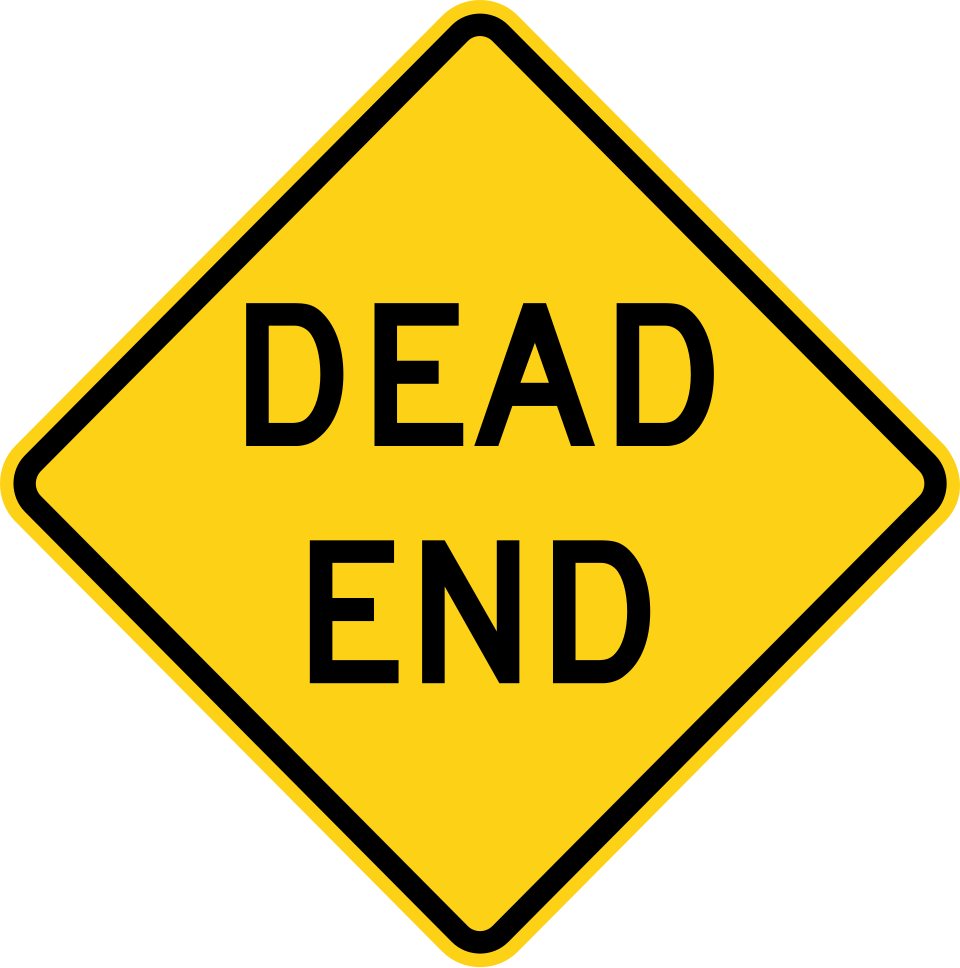
The Dead End Road Sign: A Comprehensive Guide for Learner Drivers
For every new driver navigating the complex web of public roadways, recognizing and reacting appropriately to regulatory signage is a fundamental skill. Among the most critical of these is the "Dead End" sign, a vital warning that prevents drivers from entering a street with no exit. Visually, this sign is distinct and unmistakable: it is a rectangular plaque featuring a bold black legend on a white background, typically accompanied by a black arrow pointing upward or in the direction of travel. The text usually reads "DEAD END" or "NO OUTLET," often paired with a graphic symbol of a T-intersection where the vertical line terminates. Unlike warning signs which are diamond-shaped and yellow, the Dead End sign is regulatory in nature, utilizing the high-contrast black-on-white color scheme to convey a mandatory instruction rather than a mere suggestion. Its primary purpose is to inform drivers that the road they are about to enter does not connect to another through street, meaning there is no way to exit the street other than by turning around. For a learner driver, understanding this sign is not just about avoiding a wrong turn; it is about safety, traffic flow management, and understanding the physical limitations of the infrastructure around them.
What it Means
Formally, the Dead End sign serves as a regulatory notification that the roadway ahead terminates without an outlet. In the context of the Manual on Uniform Traffic Control Devices (MUTCD), while specific sign codes may vary by state adoption, the sign generally falls under the category of warning or regulatory signs designated to alert drivers to the nature of the road ahead. The definition is absolute: the street you are entering leads to a cul-de-sac, a turnaround point, or a physical barrier such as a wall, fence, or body of water, with no connecting road to allow for through traffic. For the driver, the required action is immediate and clear. Upon seeing this sign, you must acknowledge that you cannot continue driving straight to reach a different destination. If your intended destination is not located on this specific street, you must prepare to turn around before reaching the end. The sign effectively closes the option of "through travel." It implies that if you proceed, you will be forced to perform a U-turn, a three-point turn, or a full-circle turnaround in a potentially confined space. For learner drivers, this is a crucial moment to assess whether the destination is actually on this road. If it is not, the correct action is to turn around at the next available safe opportunity, rather than driving to the very end of the street where space may be limited and maneuvering difficult. The sign acts as a pre-emptive instruction, saving the driver from the frustration and potential hazard of being trapped at the end of a road with no exit.
Where You'll See It
Dead End signs are strategically placed to ensure maximum visibility before a driver commits to entering a non-through street. You will most commonly encounter these signs at the entrance of residential neighborhoods, particularly in suburban developments where streets are designed as cul-de-sacs or loops that do not connect to major arterial roads. They are frequently found at the intersection where a minor residential street meets a larger through street. In these scenarios, the sign is often mounted on a post at the corner, facing the driver approaching from the through street, ensuring they see it before turning into the dead-end street. Additionally, you may see these signs in rural areas where a road leads to a private driveway, a construction site, or a natural barrier like a cliff or a river. In urban environments, they might appear in older city grids where a street was closed off due to redevelopment or safety concerns. The placement is almost always at the point of decision—the intersection itself. Sometimes, if the street is long, a secondary sign might be placed further down the road to reinforce the message, but the primary sign is always at the entry point. For learner drivers, it is important to scan the periphery of intersections, not just the center, as these signs are often mounted on the right-hand side of the road or on the corner post, sometimes slightly obscured by vegetation or parked cars. Recognizing the sign early allows the driver to make a smooth, controlled decision rather than a last-minute panic maneuver.
What to Do When You See It
When a learner driver spots a Dead End sign, the immediate response should be a mental check of the navigation plan. The first step is to verify the destination. If the destination is not on this street, the driver must signal and prepare to turn around at the next safe opportunity. This might mean turning around at the very next intersection if the street is long enough, or waiting until the end of the block if no other options exist. If the driver decides to proceed to the end of the street, perhaps to visit a specific address located there, they must drive with heightened caution. Dead end streets often have different traffic dynamics than through streets. They may have slower speeds, but they can also be crowded with parked cars, children playing, or pets, as residents know there is no through traffic. The driver should reduce speed, scan the sidewalks and driveways carefully, and be prepared to stop. Upon reaching the end of the road, the driver must execute a safe turnaround. This is a critical skill for learner drivers. If the cul-de-sac is wide, a simple U-turn may suffice. If the space is tight, a three-point turn (K-turn) may be necessary. The driver must check for oncoming traffic from behind (since no one should be coming from the dead end, but someone might have just entered), signal clearly, and maneuver smoothly. It is vital to remember that the Dead End sign is a warning of a physical constraint; failing to plan for the turnaround can lead to getting stuck in a narrow space or blocking traffic. Always ensure the vehicle is fully under control and that the maneuver is legal and safe before attempting to reverse direction.
Common Pitfalls
Learner drivers often make specific mistakes when encountering Dead End signs. One of the most common errors is ignoring the sign and driving to the end of the street out of curiosity or confusion, only to realize too late that they cannot exit. This can lead to unnecessary stress and dangerous maneuvering in tight spaces. Another pitfall is failing to recognize the sign until it is too late to turn around safely. Because the sign is often small and placed at the corner, new drivers focused on the road ahead or their mirrors might miss it entirely. Additionally, some drivers mistake the Dead End sign for a "No Parking" or "Do Not Enter" sign. While the outcome (not going further) is similar, the meaning is different. A "Do Not Enter" sign prohibits entry entirely, whereas a Dead End sign allows entry but warns of the lack of an exit. Confusing these can lead to illegal maneuvers or missed destinations. Another frequent error is poor execution of the turnaround. Learners often forget to check their blind spots or fail to signal properly when performing a U-turn or three-point turn at the end of a dead-end street. They may also panic if the turnaround space is smaller than expected, leading to jerky steering or stalling the vehicle. Finally, some drivers assume that because there is no through traffic, they can drive faster. This is dangerous; dead-end streets are often where pedestrians and children are most active, requiring even greater vigilance and lower speeds.
Permit-Test Context
In the context of the driver's permit written test, the Dead End sign is a staple question. Examiners want to ensure that applicants can identify the sign's shape, color, and meaning. A typical question might show an image of the sign and ask, "What does this sign mean?" with options like "Road closed," "No parking," "Dead end," or "Yield." The correct answer is obviously "Dead end." However, the test may also present a scenario-based question. For example: "You see a Dead End sign while driving. What should you do?" The correct response would involve checking your destination, preparing to turn around, and proceeding with caution if the destination is on that street. The test may also ask about the sign's category, expecting the answer that it is a regulatory or warning sign (depending on the specific state's curriculum, though often categorized under warning signs in practice, it functions as a regulatory instruction). Learners should also be prepared to identify the sign in a diagram of an intersection. It is crucial to memorize the visual characteristics: the rectangular shape, the black text, and the arrow or T-shape symbol. Understanding the sign is not just about passing the test; it is a fundamental safety requirement for navigating the road network. Failing to recognize this sign can lead to real-world consequences, including getting lost, causing traffic congestion, or endangering pedestrians in a residential area.