Mastering the Fallen Rocks Road Sign: A Guide for Learner Drivers
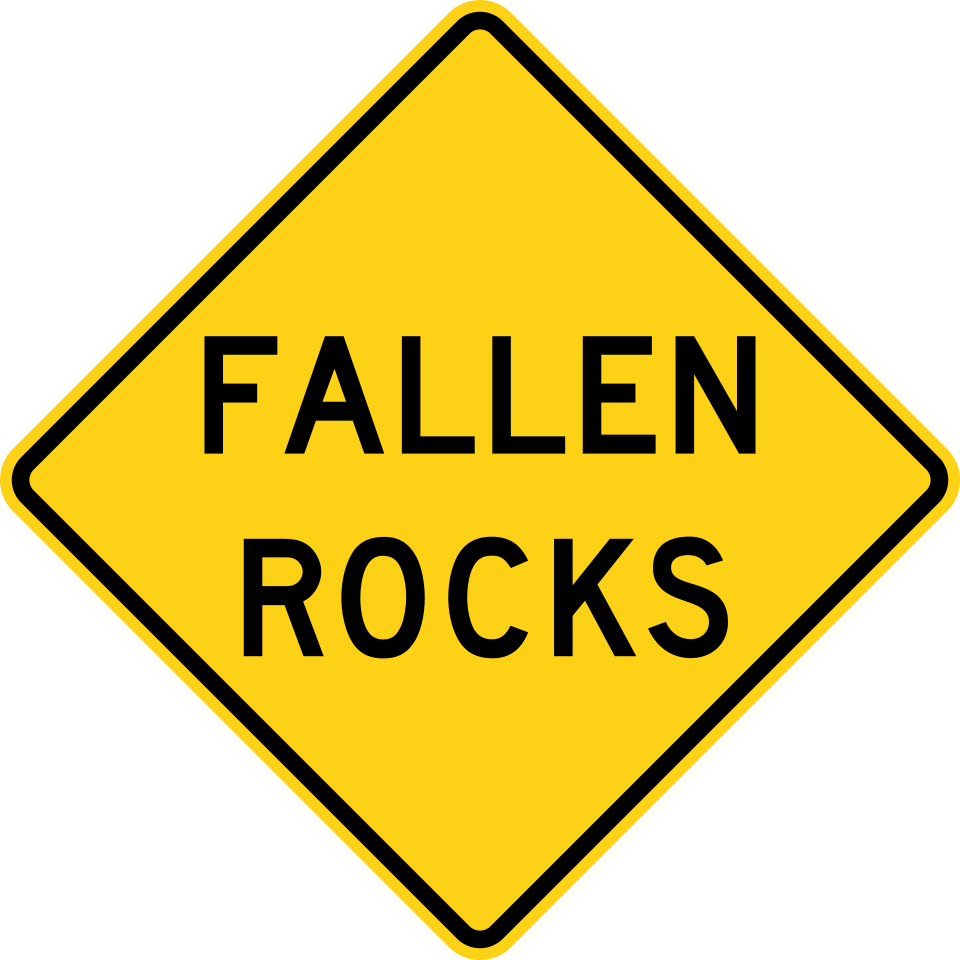
For new drivers navigating the complexities of the road, recognizing and reacting to warning signs is a critical skill that ensures safety for everyone on the highway. Among the most visually distinct and potentially hazardous signs is the "Fallen Rocks" sign. This sign is a diamond-shaped warning marker, typically featuring a bright yellow background with a black border and a black silhouette depicting rocks tumbling down a slope. Unlike regulatory signs that dictate mandatory actions like stopping or yielding, this sign serves as a crucial alert, informing drivers of a specific natural hazard ahead. Its primary purpose is to warn motorists that the roadway may be obstructed by loose stones, boulders, or debris that have fallen from the adjacent cliffs or hillsides. Understanding this sign is not just about passing a written test; it is about developing the situational awareness necessary to navigate mountain passes, canyon roads, and steep embankments where geological instability poses a real threat to vehicle control and passenger safety.
What It Means
The formal definition of the Fallen Rocks sign, often designated as W8-13 in the Manual on Uniform Traffic Control Devices (MUTCD), is a warning that the roadway is subject to rockfalls. While the MUTCD categorizes this primarily as a warning sign rather than a regulatory sign, its implications for driver behavior are as strict as any regulatory command. The sign indicates that the geological formation adjacent to the road is unstable and that rocks may fall onto the travel lane at any time, regardless of weather conditions, though the risk often increases during heavy rain, freeze-thaw cycles, or seismic activity.
When a learner driver encounters this sign, the required action is immediate and proactive. It does not mean you must stop unless you see an obstruction, but it does mandate a significant reduction in speed and an increase in vigilance. The driver must scan the road surface continuously for debris, avoid driving directly under overhanging cliffs if possible, and be prepared to brake suddenly or maneuver around obstacles. The sign essentially shifts the driver's mindset from passive cruising to active hazard scanning. It serves as a reminder that the environment is dynamic and that the road surface may change instantly. In many jurisdictions, ignoring this warning and failing to exercise due care when a rockfall occurs can be considered negligence, even if the rockfall was an "act of nature," because the driver was warned of the specific risk.
Where You'll See It
Fallen Rocks signs are strategically placed in areas where the topography creates a natural risk of rockslides. You will most commonly encounter these signs on winding mountain highways, canyon roads, and coastal routes where steep cliffs rise directly above the pavement. They are frequently found in regions with significant geological erosion, such as the Sierra Nevada mountains in California, the Rocky Mountains, or the rugged coastlines of the Pacific Northwest. These signs are often installed at the beginning of a hazardous stretch of road and may be repeated at intervals if the danger zone is extensive.
Placement is critical for effectiveness. Engineers typically install the sign well in advance of the hazard zone to give drivers enough time to react. You might see them near tunnel entrances, where the road cuts through a mountain, or on the outside of sharp curves where the road is carved into a hillside. In some cases, you will see these signs accompanied by other warning signs, such as "Steep Grade" or "Slippery When Wet," creating a compound warning that demands even greater caution. They are rarely found in flat, urban environments unless there is a specific construction site involving excavation near a roadway, though in those cases, temporary construction signage is usually used instead of the permanent yellow diamond.
What to Do When You See It
Upon spotting the Fallen Rocks sign, a learner driver should immediately execute a series of defensive driving maneuvers. First, ease off the accelerator to reduce speed. Slowing down provides more time to react if a rock appears in the lane and reduces the severity of a potential collision. Second, increase your following distance from the vehicle ahead. If the car in front of you swerves to avoid a rock, you need ample space to do the same without causing a rear-end collision.
Third, keep your eyes moving. Do not stare at the dashboard or the GPS. Your gaze should be scanning the road surface for small stones, larger boulders, or dust clouds that might indicate a recent fall. Look up at the cliffsides as well, watching for movement or falling debris. If you see a rock in the road, do not attempt to jump over it at high speed, as this can cause loss of control. Instead, slow down significantly and, if it is safe to do so, steer around it. If the road is completely blocked, do not attempt to drive through the debris. Pull over to a safe location, turn on your hazard lights, and call for assistance. Remember, no destination is worth risking your life on a road that is actively shedding rocks.
Common Pitfalls
Learner drivers often make several critical mistakes when encountering the Fallen Rocks sign. The most common error is complacency. Because the sign is a warning and not a command to stop, many new drivers assume that if they do not see a rock immediately, the sign is irrelevant. They may glance at the sign and then return their focus to the radio or their phone, failing to maintain the heightened state of alertness required for the duration of the hazard zone.
Another pitfall is driving too fast for conditions. Even if the road appears clear, the presence of the sign indicates that the margin for error is slim. A driver traveling at the posted speed limit might still be going too fast for a road prone to sudden rockfalls. Additionally, some drivers panic when they see a small rock on the road and make erratic steering movements, potentially losing control of the vehicle. It is crucial to remain calm, slow down, and assess the situation before making any maneuvers. Finally, some drivers fail to recognize that the hazard may extend beyond the sign. The danger zone can last for miles, and drivers should not relax their vigilance until they have clearly passed the area where the cliffs are unstable.
Permit-Test Context
In the context of a learner's permit or driver's license written exam, the Fallen Rocks sign is a frequent subject of multiple-choice questions. Examiners often test your ability to identify the sign by its shape and color, asking you to select the correct meaning from a list of options. You might be shown an image of the sign and asked, "What does this sign indicate?" with distractors like "Road Work Ahead," "Slippery When Wet," or "Deer Crossing." It is essential to memorize the specific silhouette of the falling rocks to distinguish it from similar warning signs.
Furthermore, the test may include scenario-based questions. For example, "You see a Fallen Rocks sign. What should you do?" The correct answer will always involve reducing speed and increasing alertness, rather than stopping immediately or ignoring the sign. Some tests may also ask about the legal implications, such as whether you are required to stop if the road is clear (you are not) or what to do if the road is blocked (do not proceed). Understanding the nuance between a warning sign and a regulatory sign is key to answering these questions correctly. Remember, the goal of the test is to ensure you understand that this sign requires a change in driving behavior to ensure safety.