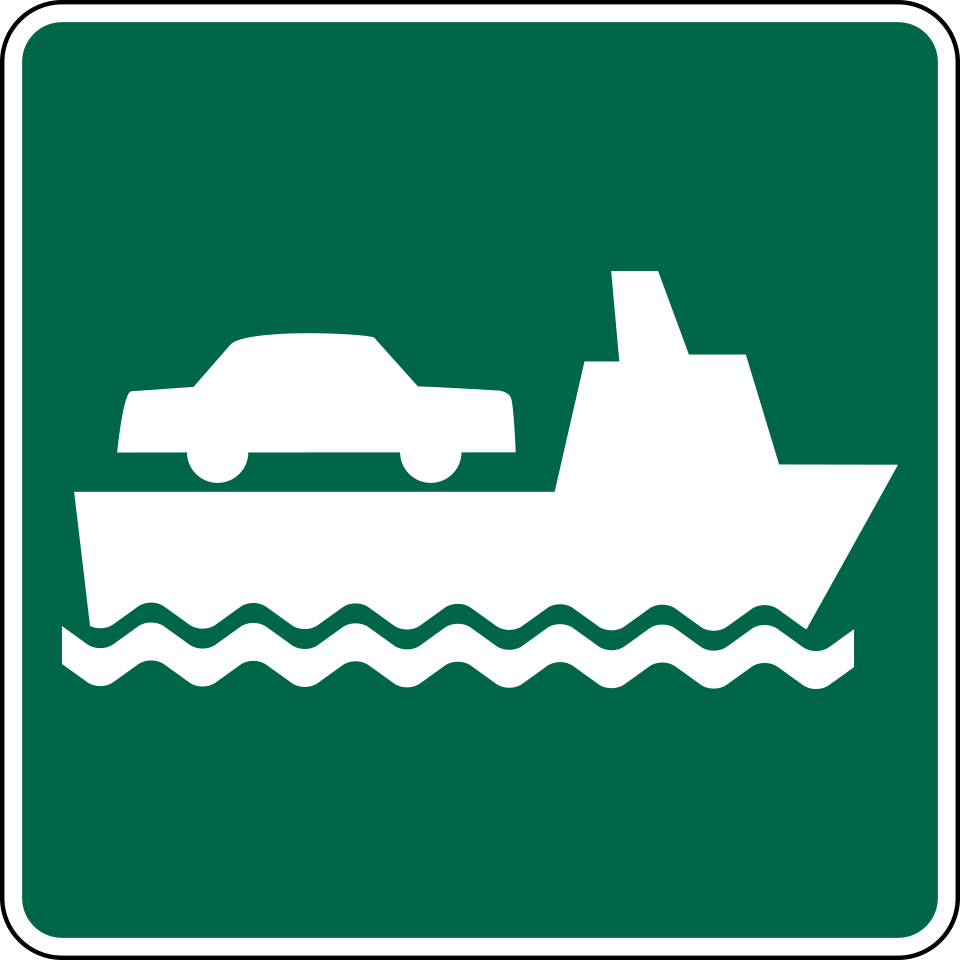
The Ferry Crossing Sign: A Comprehensive Guide for Learner Drivers
For new drivers navigating the vast network of American roadways, recognizing the unique symbols and shapes of traffic control devices is a fundamental skill. Among the most distinct and historically significant signs is the Ferry Crossing sign. Unlike the standard regulatory signs that demand immediate stops or speed reductions, the Ferry Crossing sign serves as a critical informational and cautionary marker. Visually, this sign is a diamond-shaped plaque featuring a black silhouette of a ferry boat on a yellow background. The yellow color signifies a warning, alerting the driver to a potential hazard or a change in road conditions ahead, while the diamond shape is the universal standard for warning signs in the United States. The symbol itself is unmistakable: a flat-bottomed vessel, often depicted with a cabin and a ramp, floating on stylized waves. This sign does not legally mandate a stop in the same way a Stop sign does; rather, it informs the driver that the road they are traveling on terminates at a waterway where a ferry service operates, requiring a transition from driving to boarding. Understanding this sign is vital for learner drivers, as it signals a specific type of traffic flow interruption and potential queuing that differs from standard intersections.
What it means
The formal definition of the Ferry Crossing sign (designated as W10-1 in the Manual on Uniform Traffic Control Devices, or MUTCD) is to warn road users that they are approaching a location where a ferry boat service crosses a body of water. It indicates that the roadway does not continue across the water via a bridge or tunnel but instead relies on a vessel to transport vehicles and pedestrians. For the driver, the meaning extends beyond simple identification; it implies a change in the nature of the journey. The road ahead leads to a terminal where traffic must stop, wait in line, and board a vessel. This sign is categorized as a warning sign, not a regulatory sign, meaning its primary function is to alert drivers to a condition that requires caution and preparation rather than to enforce a specific legal command like a speed limit or a prohibition. However, the practical implication is that drivers must be prepared to stop, potentially for an extended period, depending on the frequency of the ferry service and the volume of traffic. The sign serves as an early notification, allowing drivers to check schedules, prepare their vehicles for boarding (such as ensuring windows are down for communication with the operator), and mentally adjust to the stop-and-go nature of ferry terminals.
Where you'll see it
The placement of the Ferry Crossing sign is strategic and follows the guidelines set forth by the MUTCD to ensure maximum visibility and adequate reaction time. You will typically encounter this sign well in advance of the ferry terminal, often placed on the approach road leading to the water. The specific distance depends on the speed limit of the road and the complexity of the approach. On high-speed rural highways, the sign may be placed several hundred feet or even a mile before the terminal to give drivers ample time to slow down and prepare for a potential queue. In urban or congested areas, the placement might be closer to the terminal, but it is almost always accompanied by supplementary plaques indicating the distance to the crossing (e.g., "1/2 MILE" or "NEXT RIGHT"). Furthermore, you will often see a series of these signs. The first sign appears at a significant distance, followed by a second sign closer to the terminal, and sometimes a third sign immediately before the queuing area. This repetition is crucial because ferry terminals can be located in remote areas where drivers might be distracted by scenery or where the road geometry makes the terminal difficult to see until it is too late. Additionally, these signs are frequently found near the entrance to the ferry dock, sometimes accompanied by traffic signals or flaggers who manage the flow of vehicles onto the boat.
What to do when you see it
Upon spotting the Ferry Crossing sign, a learner driver must immediately shift their mindset from continuous driving to terminal preparation. The first action is to reduce speed. Ferry terminals often have lower speed limits than the approaching highway, and the area is prone to sudden stops as vehicles queue up. Drivers should scan the road ahead for any visible lines of cars or traffic signals that might indicate the ferry is currently loading or full. It is also essential to check the time. Unlike a bridge that is open 24/7, many ferry services operate on specific schedules, especially in rural or seasonal locations. If the sign is accompanied by a schedule plaque, the driver must verify if the next departure is imminent or if they will face a long wait. Drivers should also prepare their vehicle for the boarding process. This includes ensuring that all windows are rolled down, as ferry operators often need to speak directly to drivers to assign lanes or provide safety instructions. Additionally, drivers should be ready to stop completely and wait patiently. The sign implies that the road ends, and the only way forward is to board. Failure to prepare can lead to confusion, missed departures, or unsafe maneuvers in the terminal area. Finally, drivers must be aware that the ferry may not run continuously; if the sign indicates a specific operating season, drivers must be prepared for the possibility that the service is not currently active, in which case the road may be closed or detoured.
Common pitfalls
Learner drivers often fall into several traps when encountering the Ferry Crossing sign. One of the most common mistakes is treating the sign as a mere informational marker and failing to slow down. Because the sign is yellow and diamond-shaped, some drivers assume it is a "look out" sign for a scenic view rather than a warning of a mandatory stop. This can lead to speeding into a terminal where traffic is backed up, causing rear-end collisions. Another pitfall is the assumption that the ferry is always running. In many regions, ferry services are seasonal or operate on limited hours. A driver might approach the sign expecting to cross, only to find the terminal closed for the night or the season, leading to a dead end or a long detour. Additionally, drivers often fail to prepare for the queuing process. Unlike a standard intersection where traffic moves relatively quickly, ferry queues can be static for long periods. Drivers who do not bring entertainment, fail to check their fuel levels, or do not prepare their vehicles for boarding (e.g., forgetting to roll down windows) can create bottlenecks and frustration for themselves and others. Finally, some drivers mistake the ferry sign for a bridge sign and fail to anticipate the unique maneuvering required to board a vessel, such as following specific lane markings or waiting for the ramp to lower.
Permit-test context
In the context of a learner's permit or driver's license written test, the Ferry Crossing sign is a frequent subject of multiple-choice questions. Examiners often test the candidate's ability to identify the sign by its shape and color, asking, "What does a yellow diamond sign with a boat symbol indicate?" The correct answer is always related to a ferry crossing or a water crossing by boat. More advanced questions may ask about the appropriate driver response. For example, a question might present a scenario: "You see a Ferry Crossing sign ahead. What should you do?" The correct choice will involve slowing down, checking for a schedule, and preparing to stop. Test-takers must also be able to distinguish the Ferry Crossing sign from other water-related signs, such as the "Bridge Out" sign or signs indicating a steep grade near water. The test may also include questions about the meaning of supplementary plaques, such as "Ferry Service Ends" or "Next Ferry at 2:00 PM." Understanding the sign is not just about memorization; it is about demonstrating situational awareness. The test aims to ensure that new drivers recognize that the road ahead requires a specific type of navigation and patience, distinct from standard highway driving. Failing to recognize this sign or misunderstanding its implications can result in a failed section of the exam, as it represents a critical safety hazard if ignored.