Mastering the No Passing Zone: A Comprehensive Guide for Learner Drivers
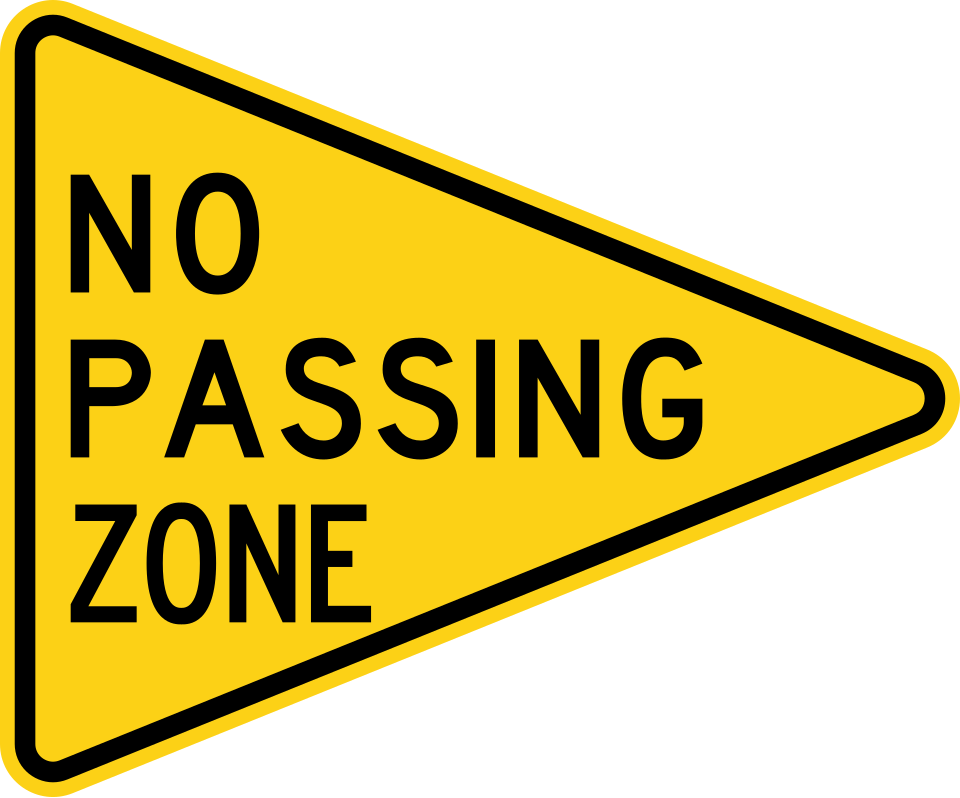
For every new driver navigating the complexities of the road, understanding regulatory signage is the foundation of safe operation. Among the most critical of these is the No Passing Zone sign. Visually distinct and impossible to miss, this sign features a pennant-shaped yellow background with bold black text reading "NO PASSING ZONE." Unlike the standard rectangular warning signs, its unique triangular shape, pointing to the right, serves as a secondary confirmation of a no-passing area that has already been established by a vertical "Do Not Pass" sign. The color scheme—yellow and black—is universally reserved for warning and caution, alerting drivers to a specific hazard ahead. The meaning is absolute: in the lane where this sign is posted, overtaking another vehicle by crossing the center line is strictly prohibited due to limited visibility or other road hazards. Ignoring this sign not only endangers the driver and passengers but also violates federal and state traffic codes, often resulting in severe penalties.
What it means
The formal definition of the No Passing Zone sign is rooted in the concept of regulatory prohibition. While the vertical "Do Not Pass" sign (R4-1) initiates the restriction, the pennant-shaped sign (R4-2) is specifically placed on the left side of the road to mark the beginning of the zone where passing is unsafe. In the context of the Manual on Uniform Traffic Control Devices (MUTCD), this sign indicates that the roadway geometry, traffic conditions, or visibility constraints make it impossible to complete a passing maneuver safely before encountering oncoming traffic.
For a learner driver, the required action is binary and non-negotiable: do not cross the center line to overtake another vehicle. This restriction applies regardless of how slow the vehicle ahead is moving, provided it is traveling at a legal speed. The sign signifies that the solid yellow line on your side of the road is a barrier you cannot cross. It is important to distinguish this from a "Do Not Pass" sign that might appear on the right; the pennant sign is exclusively for the left side of the roadway, reinforcing the rule for drivers in the left-hand lane of a two-way street. The zone remains in effect until a "Passing Zone" sign (a pennant pointing left) or a broken yellow line indicates that visibility has improved and passing is once again permissible.
Where you'll see it
The placement of the No Passing Zone sign is strategic and governed by strict engineering standards. You will typically encounter this sign in areas where the road layout creates a blind spot or a physical obstruction that prevents a driver from seeing oncoming traffic for a sufficient distance. Common contexts include:
- Curves and Hills: The most frequent location is at the apex of a sharp curve or the crest of a hill. In these scenarios, the curvature of the road or the elevation change blocks the line of sight, making it impossible to determine if a car is approaching from the opposite direction.
- Narrow Bridges and Tunnels: When a two-lane road narrows to a single lane or passes through a confined space like a tunnel, passing is prohibited to prevent head-on collisions.
- Intersections and Driveways: Approaching busy intersections, railroad crossings, or areas with frequent driveway access often triggers a no-passing zone to ensure drivers can react to turning vehicles or pedestrians.
- Urban and Suburban Arterials: In areas with higher traffic density, these signs are used to maintain traffic flow and prevent erratic lane changes that could lead to accidents.
It is crucial to note that the sign is placed on the left side of the road, facing the driver. This is a unique exception to the general rule that regulatory signs are placed on the right. The left-side placement ensures that the driver in the passing lane (the left lane) sees the prohibition directly in their line of sight before attempting to move over.
What to do when you see it
Upon spotting the yellow pennant sign, a learner driver must immediately adjust their driving behavior. The primary action is to remain in your current lane and maintain a safe following distance behind the vehicle ahead. Do not attempt to accelerate to "beat" the zone or look for a gap in the oncoming traffic; the sign indicates that no safe gap exists.
If you are following a slow-moving vehicle, such as a tractor or a truck climbing a hill, patience is your most valuable tool. Resist the urge to tailgate or flash your headlights to signal the driver to move over. Instead, wait until the solid yellow line on your side of the road changes to a broken yellow line, or until you see the "Passing Zone" pennant sign. If the vehicle ahead is moving significantly slower than the flow of traffic and is legally allowed to pass (e.g., a farm vehicle with a slow-moving vehicle emblem), you may only pass if local laws explicitly permit it and if the road markings allow. However, in the presence of the No Passing Zone sign, the default rule is to wait.
Additionally, be aware that this sign often coincides with a solid yellow line on your side of the center. The sign and the line work in tandem to reinforce the message. If the line is solid, the sign is there to ensure you do not miss the visual cue, especially in low-light conditions or when the line is faded. Always scan ahead for the sign and the line simultaneously to confirm the passing status of the road.
Common pitfalls
Learner drivers often fall into specific traps when encountering the No Passing Zone sign. One of the most dangerous misconceptions is believing that the sign only applies if there is oncoming traffic. This is incorrect; the sign prohibits passing based on the potential for oncoming traffic, not the presence of it. Even if the road appears empty, crossing the solid line in a no-passing zone is a violation because the visibility is insufficient to guarantee safety.
Another common error is confusing the No Passing Zone sign with a "Do Not Pass" sign that might be temporary or related to a specific lane closure. The pennant shape is permanent and indicates a geometric restriction of the road itself. Furthermore, some drivers mistakenly believe that they can pass if the vehicle ahead is turning left. While rules vary slightly by state, generally, you cannot pass on the right if the vehicle is turning left unless there is a dedicated lane, and you certainly cannot cross the center line to pass a vehicle that is simply slowing down.
Finally, learners often fail to recognize that the zone extends until a specific termination point. They may see a gap in the trees or a straight section of road and assume the restriction has ended. The zone only ends when the road markings change or a specific "Passing Zone" sign appears. Assuming the zone has ended prematurely is a leading cause of head-on collisions in rural areas.
Permit-test context
In the context of the driver's permit written exam, the No Passing Zone sign is a high-frequency topic. Examiners often use visual questions where you must identify the sign from a set of images. You will be asked to select the correct shape (pennant) and color (yellow with black text). Be prepared to distinguish it from the "Do Not Pass" sign (white rectangle with black text) and the "Passing Zone" sign (green pennant or white rectangle, depending on the state, though often just the absence of the restriction).
Scenario-based questions are also common. You might be presented with a situation: "You are driving on a two-lane road and see a yellow pennant sign on the left. What should you do?" The correct answer will always involve maintaining your lane and not attempting to pass. Another frequent question type involves the relationship between the sign and road markings. You may be asked, "What does a solid yellow line on your side of the road combined with a No Passing Zone sign indicate?" The answer is that passing is prohibited for traffic in your lane.
Understanding the MUTCD reference for this sign is also beneficial. While the test may not ask for the specific code number, knowing that it is a regulatory sign (R4-2) helps categorize it correctly. Regulatory signs carry the force of law, meaning violations are punishable by fines and points on your license. In contrast, warning signs (like the yellow diamond) advise caution but do not inherently prohibit an action unless accompanied by a regulatory sign. The No Passing Zone sign is unique because it is a regulatory sign that uses a warning color (yellow) and a warning shape (pennant) to enforce a strict prohibition.
Mastering this sign is not just about passing a test; it is about developing the spatial awareness and patience required for safe driving. By respecting the No Passing Zone, you contribute to the safety of everyone on the road, ensuring that blind curves and hills remain safe passages for all travelers.