Understanding the No Trucks Road Sign: A Comprehensive Guide for Learner Drivers
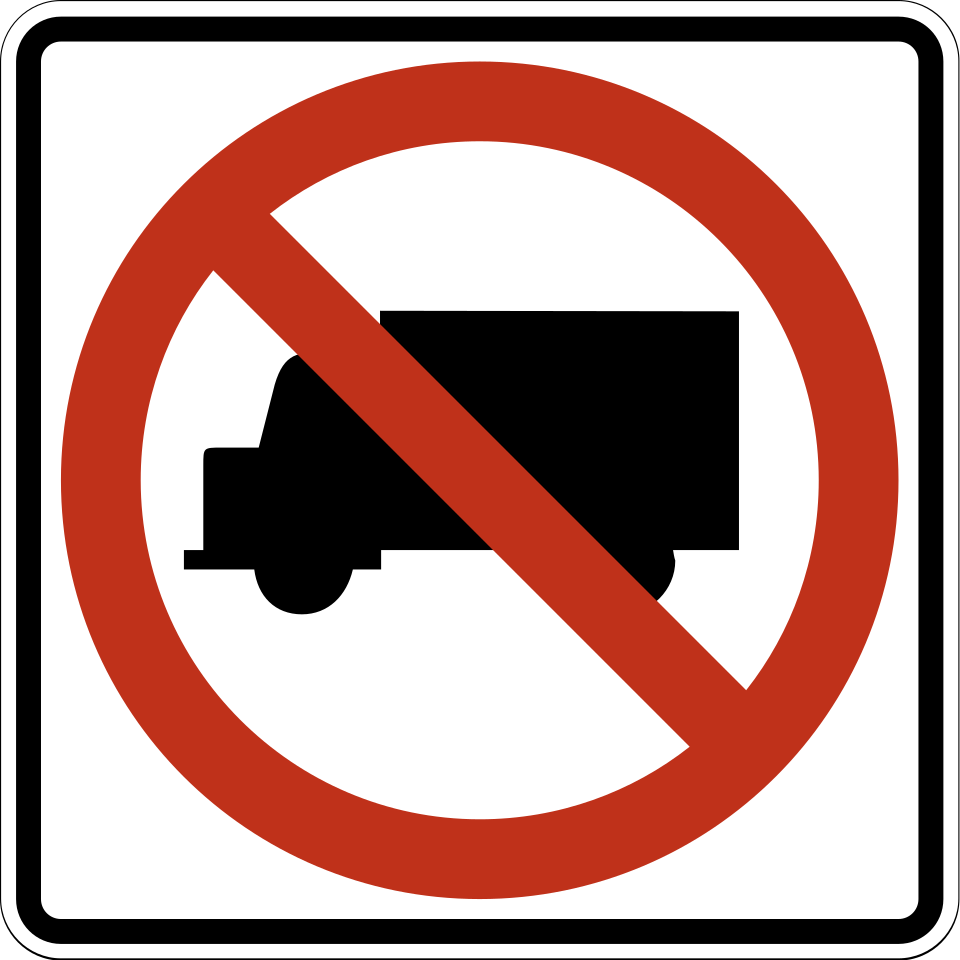
For new drivers navigating the complex web of American roadways, recognizing regulatory signage is a fundamental skill that ensures safety and legal compliance. Among the most critical of these signs is the "No Trucks" sign, a regulatory marker designed to restrict specific vehicle types from entering certain roadways or zones. Visually, this sign is distinct and unmistakable: it typically features a white square or rectangular background with a black border. Inside, a black silhouette of a truck (often a semi-trailer or a large commercial vehicle) is displayed, usually crossed out by a bold red diagonal line running from the upper left to the lower right. In some variations, the text "NO TRUCKS" or "TRUCKS PROHIBITED" may accompany the symbol. The color scheme—white, black, and red—is the universal language of prohibition in the Manual on Uniform Traffic Control Devices (MUTCD), signaling to the driver that a specific action is strictly forbidden. For a learner driver, understanding this sign is not merely about memorizing a shape; it is about recognizing the physical limitations of the road ahead and the legal boundaries of vehicle operation.
What It Means
The formal definition of the No Trucks sign is a regulatory prohibition against the entry of trucks, tractor-trailers, and other large commercial vehicles into the designated area. While the specific definition of "truck" can vary slightly depending on local ordinances, the sign generally applies to vehicles exceeding a certain weight limit (often 3 tons or 6,000 pounds) or vehicles with a specific configuration, such as those with more than two axles or those designed for hauling cargo. The primary purpose of this sign is to protect infrastructure that cannot support heavy loads, such as older bridges, narrow residential streets, or roads with sharp curves and steep grades that are unsafe for large vehicles to navigate.
For the driver, the action required is absolute and immediate. Upon seeing this sign, a driver operating a vehicle that falls under the definition of a "truck" must not proceed past the sign. This is not a suggestion or a warning of potential hazards; it is a legal command. If a driver is operating a personal passenger vehicle, the sign generally does not apply to them, unless they are towing a trailer that pushes their combined weight or configuration into the prohibited category. However, the sign serves as a vital cue for all drivers to be aware of the road's limitations. If a learner driver is behind a truck that ignores this sign, they must be prepared to react, as the truck may become stuck, block the road, or cause structural damage. The sign effectively creates a boundary line that heavy vehicles cannot cross, ensuring the longevity of the roadway and the safety of all users.
Where You'll See It
The placement of the No Trucks sign is strategic and is almost always found in contexts where the road infrastructure cannot safely accommodate heavy commercial traffic. Learner drivers will most frequently encounter this sign at the entrance to residential neighborhoods. In these areas, the streets are often narrow, lacking the turning radius required for large trucks, and the pavement may not be reinforced to handle the weight of a semi-trailer. Additionally, these signs are common near schools, parks, and historic districts where pedestrian safety is paramount and the noise and vibration from heavy trucks are undesirable.
Another critical location for this sign is at the approach to specific bridges and tunnels. Many older bridges were constructed before modern heavy-duty trucking became the norm and have weight limits that are significantly lower than current federal standards. In these instances, the No Trucks sign is often accompanied by a supplementary plaque indicating the specific weight limit (e.g., "Weight Limit 10 Tons"). You may also see these signs on steep mountain passes or winding rural roads where the geometry of the road makes it impossible for a long vehicle to navigate a curve without mounting the shoulder or colliding with oncoming traffic. Finally, these signs are prevalent in urban centers where through-traffic for commercial vehicles is restricted to designated freight corridors to reduce congestion and improve air quality in dense population centers.
What to Do When You See It
When a learner driver encounters a No Trucks sign, the first step is to immediately assess the type of vehicle they are operating. If the driver is in a standard passenger car, SUV, or light pickup truck, the sign does not legally prohibit their entry, but it should serve as a warning that the road ahead is not designed for heavy traffic. The driver should proceed with caution, aware that the road may be narrow, the pavement may be weak, or there may be sharp turns ahead.
If the driver is operating a vehicle that qualifies as a truck—such as a large box truck, a semi-trailer, or a heavy-duty commercial vehicle—the correct action is to stop and turn around before passing the sign. Ignoring this sign can lead to severe consequences, including getting the vehicle stuck in a narrow street, causing a bridge collapse, or facing significant legal penalties. In many jurisdictions, violating a weight restriction or a truck prohibition sign can result in heavy fines, vehicle impoundment, and points on the driver's license. If a driver finds themselves in a situation where they have accidentally entered a restricted zone, they should look for the nearest safe place to turn around, even if it requires a three-point turn or backing up, rather than proceeding further into the restricted area. Safety and compliance must always take precedence over convenience.
Common Pitfalls
Learner drivers often fall into several traps when interpreting the No Trucks sign. One of the most common mistakes is assuming the sign applies only to massive semi-trailers. In reality, many states define "truck" based on weight or axle count, meaning a large pickup truck with a heavy camper shell or a delivery van might be prohibited. Drivers often fail to check their vehicle's Gross Vehicle Weight Rating (GVWR) against the restrictions implied by the sign. Another pitfall is the assumption that the sign is merely a suggestion for "better" driving. Unlike a warning sign (yellow diamond), a regulatory sign (white rectangle) carries the force of law. Ignoring it is a traffic violation, not just a bad driving choice.
Additionally, some drivers confuse the No Trucks sign with signs that restrict parking or stopping. The No Trucks sign prohibits entry, not just parking. A driver cannot enter the zone even for a moment to drop off a passenger if their vehicle is prohibited. Furthermore, learners sometimes overlook supplementary plaques. A sign might say "No Trucks" but have a small plate below it that reads "Except Local" or "Except with Permit." Failing to read these details can lead to unnecessary confusion or, conversely, a false sense of security. Finally, a common error is failing to anticipate the behavior of other drivers. If a learner sees a truck ignoring the sign, they should not assume the truck is allowed; they should assume the truck is making a mistake and be prepared to yield or alert authorities if the truck appears to be in distress.
Permit-Test Context
On the written permit test, the No Trucks sign is a frequent subject of questions designed to test a candidate's knowledge of regulatory signs and their ability to interpret vehicle restrictions. Questions may present an image of the sign and ask what it means, offering options like "Trucks must stop," "Trucks are prohibited," or "Trucks must yield." The correct answer is always that trucks are prohibited from entering. Test-takers may also be asked to identify the sign based on a description, such as "a white square with a red diagonal line through a truck symbol."
More complex questions might involve scenario-based reasoning. For example, a question might describe a driver in a 7,000-pound vehicle approaching a bridge with a No Trucks sign and a weight limit plaque. The test-taker must determine if the driver can cross. These questions assess whether the learner understands that the sign applies to the specific vehicle they are driving, not just to commercial traffic in general. It is crucial for learners to memorize the visual characteristics of the sign and the legal implications of ignoring it, as these are high-probability topics on the DMV exam. Understanding the distinction between regulatory signs (white/black/red) and warning signs (yellow/black) is also a key component of passing the test, as the No Trucks sign falls squarely into the regulatory category.