Mastering the One Way Road Sign: A Comprehensive Guide for Learner Drivers
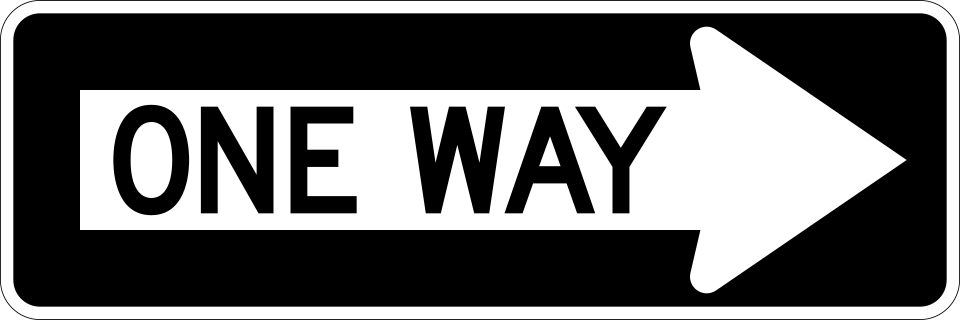
For new drivers navigating the complex web of city streets and highways, the One Way sign is a critical regulatory marker that demands immediate attention and strict adherence. Visually, this sign is distinct and unmistakable: it is a rectangular sign with a white background and bold black lettering that reads "ONE WAY," accompanied by a large black arrow pointing in the direction of permitted traffic flow. Unlike warning signs that are typically diamond-shaped and yellow, or guide signs that are green or blue, the One Way sign falls squarely into the regulatory category. Its primary function is to inform drivers that all traffic on the roadway ahead must travel in the single direction indicated by the arrow. Ignoring this sign can lead to catastrophic head-on collisions, making it one of the most important signs a learner driver must recognize instantly. Whether mounted on a pole, attached to a traffic signal, or placed on a wall, its message is absolute: do not enter against the flow.
What It Means
The formal definition of the One Way sign, as established by the Mutual Traffic Control Devices (MUTCD) under section R6-1, is a regulatory sign that indicates a roadway or a portion of a roadway is designated for traffic flow in only one direction. This designation applies to the entire lane or the entire street, depending on the context. When a driver encounters this sign, the legal requirement is unambiguous: the driver must proceed only in the direction of the arrow. It is a prohibition against traveling in the opposite direction. For a learner driver, understanding the implications of this sign goes beyond simple navigation; it is a matter of safety and legal compliance. The sign effectively transforms a two-way street into a one-way corridor. This means that oncoming traffic, which you would normally expect to see in the left lane, will be absent. Instead, all vehicles, including those in adjacent lanes, are moving in the same direction. The sign serves as a definitive boundary. If you are facing the sign, you are at the entrance to a one-way street, and you must turn or proceed in the direction of the arrow. If you are already on the street and see a One Way sign pointing the opposite way, it indicates you are driving the wrong way and must immediately correct your course.
Where You'll See It
One Way signs are strategically placed in urban and suburban environments where traffic flow management is essential for safety and efficiency. You will most commonly encounter these signs at intersections where a two-way street meets a one-way street. In these scenarios, the sign is often mounted on the traffic signal pole or on a post at the corner, facing the driver who is about to turn. It is crucial to look for these signs before making a turn, as turning left or right against the flow of a one-way street is a severe violation. Another frequent location is at the entrance of alleys, parking garages, and specific lanes on multi-lane roads. In downtown areas, entire blocks may be converted to one-way traffic to increase throughput and reduce congestion. In these cases, you might see a series of One Way signs repeated at regular intervals to reinforce the direction of travel. Additionally, these signs are often paired with pavement markings, such as arrows painted on the road surface, to provide redundant visual cues. You may also see them on the back of other signs or on overhead gantries in complex interchanges where lanes split or merge. For learner drivers, it is vital to scan not just the road ahead but also the periphery and overhead structures, as the sign may appear in unexpected locations to prevent accidental wrong-way entries.
What to Do When You See It
Upon spotting a One Way sign, your immediate action should be to verify the direction of the arrow and align your vehicle accordingly. If you are approaching an intersection and the sign indicates that the cross street is one-way to the right, you may only turn right. A left turn would be illegal and dangerous. If the sign is facing you directly on the road you are currently traveling on, it confirms that you are moving in the correct direction, and you should continue forward, maintaining your lane discipline. If you are driving and suddenly realize you have entered a one-way street in the wrong direction (perhaps because you missed a sign or the sign was obscured), the correct action is to stop immediately if it is safe to do so. Do not attempt to reverse or U-turn in the middle of the street unless absolutely necessary and only when it is safe and legal to do so. The safest course of action is often to pull over to the right shoulder, activate your hazard lights, and wait for a safe opportunity to turn around at the next legal intersection. Remember, the goal is to re-enter the flow of traffic in the correct direction as quickly and safely as possible. Always yield to any oncoming traffic that may be approaching, even if you believe you have the right of way, as the priority is to avoid a head-on collision.
Common Pitfalls
Learner drivers often fall into several traps when dealing with One Way streets. The most dangerous mistake is assuming that a street is two-way simply because it looks wide enough to accommodate traffic in both directions. Many one-way streets are wide, with multiple lanes, which can confuse new drivers who expect to see cars coming toward them. Another common error is failing to check for the sign before making a turn. Drivers often focus on the traffic light or the car in front of them and miss the One Way sign on the corner, leading to a turn against traffic. Additionally, some drivers confuse One Way signs with "Do Not Enter" signs. While both prohibit entry in a specific direction, the One Way sign specifically indicates the direction of flow, whereas "Do Not Enter" is a prohibition without indicating an alternative direction. Another pitfall is the "assumption of symmetry." Just because the street you are on is one-way does not mean the parallel street is also one-way in the same direction; they could be one-way in opposite directions. Finally, drivers sometimes ignore the sign if they see other cars driving the wrong way, assuming the rule doesn't apply. This is a fatal error; the sign is a legal mandate, and the behavior of other drivers does not negate your obligation to follow it.
Permit-Test Context
In the context of a driver's permit test, the One Way sign is a frequent subject of both written and practical questions. Written exams often present a scenario with a diagram of an intersection and ask, "Which direction can you legally turn?" or "What does this sign indicate?" You must be able to identify the sign by its shape (rectangle), color (white with black text/arrow), and meaning. Questions may also test your knowledge of the consequences of violating the sign, such as the potential for a head-on collision or the specific traffic citation you would receive. During the behind-the-wheel road test, the examiner may intentionally route you to a one-way street to observe your reaction. They will look for you to scan for the sign, acknowledge the direction, and execute a turn or lane change correctly. If you hesitate, turn the wrong way, or fail to notice the sign, it could result in an automatic failure. Examiners also watch to see if you check your mirrors and blind spots before merging into a one-way lane, as the traffic flow is different from what you are used to. Demonstrating confidence and strict adherence to the One Way sign is a clear indicator to the examiner that you understand the rules of the road and prioritize safety.