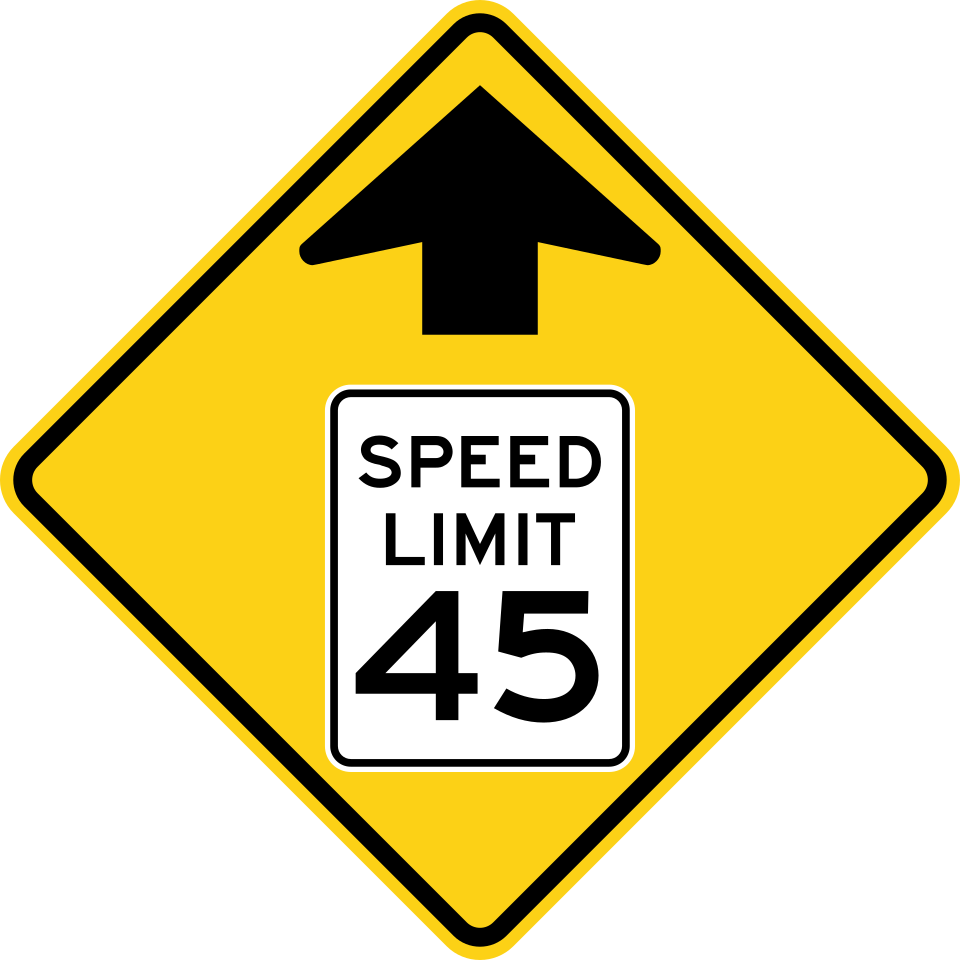
Mastering the Reduce Speed Ahead Sign: A Guide for New Drivers
For every learner driver navigating the complex web of road rules, recognizing the Reduce Speed Ahead sign is a critical skill for safety and compliance. This rectangular sign, featuring a white background with bold black lettering and a black border, serves as a crucial warning that the safe operating speed for the upcoming road segment is significantly lower than the current posted limit. Unlike warning signs that use yellow diamonds to alert drivers to potential hazards like curves or intersections, the Reduce Speed Ahead sign is a regulatory or advisory notice that explicitly instructs drivers to begin slowing down immediately. Its distinct black-on-white color scheme and vertical rectangular shape make it stand out against the environment, ensuring that even distracted drivers can identify the need to decelerate well before reaching the hazard or speed zone change. Understanding this sign is not just about passing a written test; it is about developing the anticipatory driving habits that prevent accidents and ensure a smooth flow of traffic.
What It Means
The formal definition of the Reduce Speed Ahead sign (often designated as R1-5 or R1-5a in the Manual on Uniform Traffic Control Devices, or MUTCD) is an instruction to drivers that the maximum safe speed for the approaching roadway section is lower than the current speed limit. While the sign itself does not always display a specific numerical speed, it acts as a precursor to a reduced speed zone, a sharp curve, a steep grade, or a complex intersection where the existing speed is no longer safe. In the context of the MUTCD, this sign falls under the category of regulatory or advisory signs, depending on local jurisdiction implementation, but its primary function is to mandate a change in driver behavior: deceleration.
When a driver encounters this sign, the required action is immediate and deliberate. You must begin to reduce your speed smoothly and progressively. This is not a signal to slam on the brakes, which could cause a rear-end collision, but rather a cue to lift off the accelerator and apply steady pressure to the brake pedal. The goal is to reach the new, lower safe speed by the time you reach the hazard or the point where the speed limit officially changes. For learner drivers, this sign represents a transition from the current driving environment to a more constrained one, requiring heightened situational awareness and precise vehicle control.
Where You'll See It
The placement of the Reduce Speed Ahead sign is strategic and follows strict guidelines to ensure maximum visibility and reaction time. You will typically encounter this sign in areas where the road geometry or traffic conditions change abruptly. Common contexts include:
- Approaching Sharp Curves: On highways or rural roads where a gentle straightaway suddenly transitions into a tight bend, this sign warns drivers to slow down before entering the curve to maintain traction and control.
- Steep Downgrades: Before a long, steep hill where gravity could cause a vehicle to accelerate uncontrollably, the sign alerts drivers to reduce speed to prevent brake fade or loss of control.
- Intersections and Merging Lanes: In areas where traffic patterns become complex, such as near a major intersection or a merge point where lanes narrow, the sign prepares drivers for potential stops or slow-moving traffic.
- School Zones and Residential Areas: Often placed well in advance of the actual school zone or residential speed limit change, this sign gives drivers ample time to adjust their speed from a highway pace to a neighborhood pace.
- Construction Zones: In temporary work zones, this sign is frequently used to warn drivers of reduced speed limits due to narrowed lanes, heavy machinery, or workers on the road.
These signs are usually mounted on the right side of the road, facing the driver, and are often accompanied by a supplemental plaque indicating the specific distance to the hazard (e.g., "1/4 MILE") or the specific speed to reduce to (e.g., "25 MPH").
What to Do When You See It
Upon spotting the Reduce Speed Ahead sign, a learner driver should execute a specific sequence of actions to ensure safety. First, scan the environment. Look ahead for the hazard mentioned in the sign's context—whether it's a curve, a hill, or a school zone. Check your rearview and side mirrors to assess the traffic behind you; you need to know if someone is tailgating you before you begin to slow down.
Second, initiate deceleration. Gently lift your foot off the gas pedal to allow the vehicle's natural drag to begin slowing it down. If the speed reduction required is significant, apply the brakes smoothly. Avoid "pumping" the brakes unless you are driving a vehicle without anti-lock brakes (ABS) in an emergency, and never slam on the brakes unless absolutely necessary. The objective is a gradual reduction in speed that keeps your vehicle stable and your passengers comfortable.
Third, monitor your speedometer. Do not rely solely on the feeling of speed. Watch the numbers drop to ensure you are reaching the target speed before the hazard. If the sign is accompanied by a plaque stating a specific speed (e.g., "Reduce Speed to 30 MPH"), that is your target. If no specific speed is listed, use your judgment based on the road conditions, but always aim to be well below the previous limit.
Finally, maintain awareness. Even after you have slowed down, remain vigilant. The hazard may be more severe than anticipated, or other drivers may not have reacted to the sign. Keep your hands at the 9 and 3 positions and be prepared to stop or maneuver if necessary.
Common Pitfalls
Learner drivers often make several critical mistakes when encountering the Reduce Speed Ahead sign. One of the most common errors is delayed reaction. Many new drivers wait until they are right at the curve or the intersection before they start braking. This is dangerous because it can lead to taking a corner too fast, causing the vehicle to understeer or lose traction. The sign is placed specifically to give you time to slow down *before* the hazard, not during it.
Another frequent mistake is hard braking. In an attempt to catch up to the speed limit quickly, some learners stomp on the brakes. This can cause the vehicle to jerk, potentially causing a rear-end collision if the driver behind is not paying attention. Smooth, progressive braking is the hallmark of a skilled driver.
Additionally, learners sometimes ignore the sign entirely, assuming that the current speed limit is still valid. They may fail to realize that the sign indicates a temporary or conditional reduction in safe speed that supersedes the general limit. This is particularly dangerous in school zones or construction areas where the penalty for speeding is higher and the risk to pedestrians is significant.
Finally, some drivers fail to check their mirrors before slowing down. While it is essential to slow down, doing so without checking the traffic behind can lead to accidents. Always be aware of your surroundings before initiating a significant speed change.
Permit-Test Context
On the written permit test, the Reduce Speed Ahead sign is a frequent subject of multiple-choice questions. Examiners want to ensure you understand not just what the sign looks like, but how to react to it. You might be asked, "What should you do when you see a Reduce Speed Ahead sign?" The correct answer will always involve slowing down *before* reaching the hazard, not after. You may also be asked to identify the sign from a description or an image, distinguishing it from similar signs like "Speed Limit" or "Yield."
Questions may also test your knowledge of the sign's placement. For example, "Why is the Reduce Speed Ahead sign placed 1/4 mile before a curve?" The answer relates to reaction time and stopping distance. Understanding that the sign is a warning to prepare for a change in conditions is key to answering these questions correctly. Remember, the test is designed to verify that you can anticipate hazards and adjust your driving accordingly, which is the core purpose of this sign.
In summary, the Reduce Speed Ahead sign is a vital tool for road safety. By recognizing its appearance, understanding its meaning, and reacting appropriately, learner drivers can navigate complex road conditions with confidence and safety. Always remember: see the sign, check your mirrors, slow down smoothly, and stay alert.