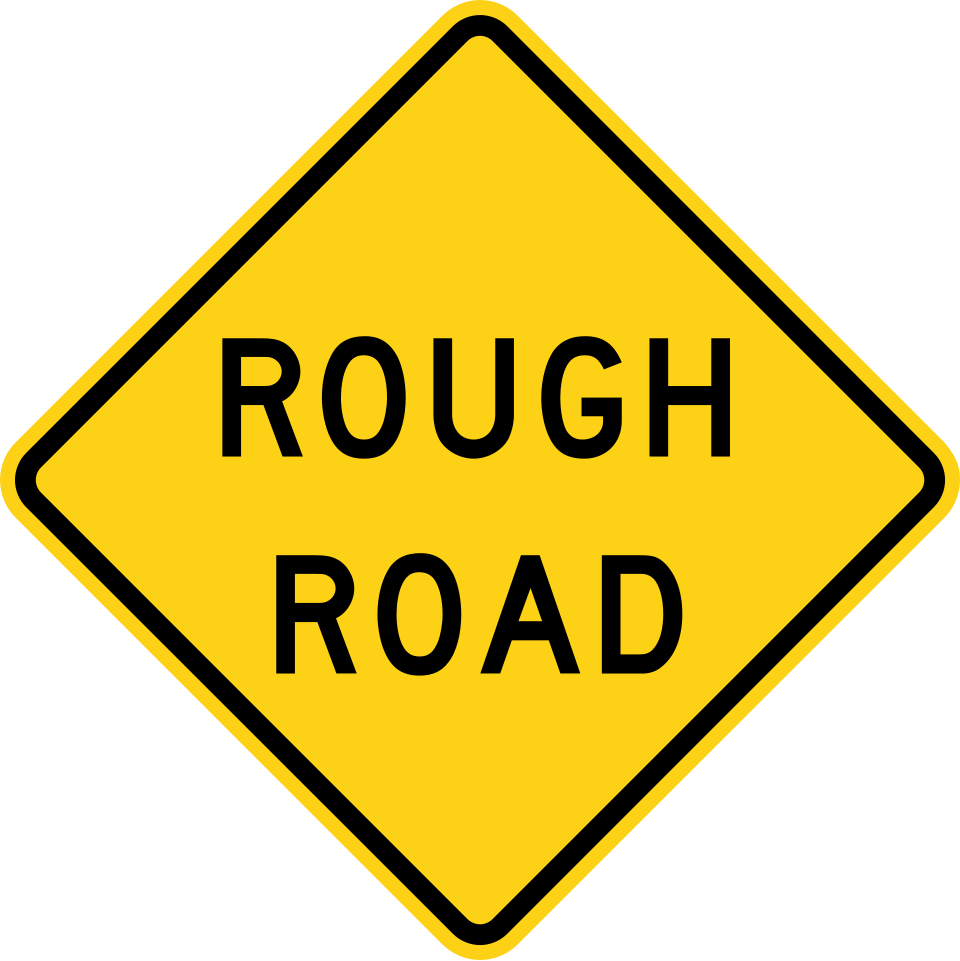
Mastering the Rough Road Sign: A Guide for New Drivers
For learner drivers navigating the complexities of the road, recognizing warning signs is a critical skill that separates a safe driver from a dangerous one. Among the most common yet frequently misunderstood indicators is the Rough Road sign. Visually, this sign is distinct: it is a diamond-shaped plaque featuring a bright yellow background with a bold black border. The central graphic depicts a stylized, uneven road surface, often illustrated as a jagged line or a series of bumps, clearly signaling that the pavement ahead is not smooth. Unlike regulatory signs that command immediate stops or speed limits, this is a warning sign, designed to alert you to a potential hazard rather than a strict rule. Its primary purpose is to prepare you for a change in road conditions that could affect vehicle control, comfort, and safety. Understanding this sign is not just about passing a written test; it is about anticipating the physical reality of the road ahead and adjusting your driving behavior accordingly to prevent loss of control or vehicle damage.
What it means
Formally, the Rough Road sign (often designated as W8-1 in the Manual on Uniform Traffic Control Devices, or MUTCD) serves as a warning that the pavement surface ahead is significantly uneven, bumpy, or damaged. This condition may result from ongoing construction, road deterioration, utility work, or natural wear and tear. The sign does not indicate a temporary obstruction like a fallen tree or a pothole that requires a full stop; rather, it warns of a sustained section of road where the surface quality is compromised. For the driver, the required action is immediate and proactive. Upon seeing this sign, you must anticipate a reduction in ride quality and a potential decrease in vehicle stability. The sign implies that the friction between your tires and the road may be inconsistent, and the suspension of your vehicle will be subjected to sudden stress. The core meaning is a directive to slow down. While there is no specific speed limit printed on the sign itself, the implied instruction is to reduce speed to a level that allows you to maintain control of the vehicle despite the bumps. If you approach this sign at highway speeds, the sudden impact can cause you to lose steering control, damage your vehicle's suspension, or even suffer a blowout. Therefore, the definition of the sign is inextricably linked to the action of deceleration and heightened situational awareness.
Where you'll see it
The placement of the Rough Road sign is strategic, governed by the need to give drivers sufficient time to react before hitting the uneven surface. You will typically encounter this sign in several specific contexts. First, it is frequently found in areas undergoing road maintenance or construction. Before a crew begins repaving or patching a section of the highway, they will place this sign to warn approaching traffic of the rough transition zones or the unfinished work ahead. Second, you will see it on rural roads or older highways where the pavement has degraded over time due to weather cycles, heavy truck traffic, or lack of recent resurfacing. In these areas, the sign serves as a permanent or semi-permanent warning of the road's poor condition. Third, it may appear near utility work zones where trenches have been dug and filled, leaving the surface uneven even after the immediate work is complete. Finally, this sign is often placed in conjunction with other warning signs. For instance, you might see a "Rough Road" sign followed by a "Speed Bump" sign or a "Low Clearance" sign, indicating a compound hazard. The sign is usually mounted on a post on the right-hand side of the road, at a distance calculated based on the speed limit of the road. On a 65 mph highway, the sign might be placed 500 to 1,000 feet before the hazard, whereas on a 35 mph residential street, it might be placed much closer to the actual rough patch.
What to do when you see it
When you spot the yellow diamond with the jagged road graphic, your response should be a sequence of controlled actions. The first and most critical step is to slow down. Do not wait until you feel the bumps; begin decelerating immediately upon seeing the sign. A good rule of thumb is to reduce your speed by 10 to 15 mph below the posted limit, or to a speed where you can comfortably navigate the bumps without losing control. Next, firmly grip the steering wheel with both hands at the 9 and 3 o'clock positions. Uneven surfaces can cause the steering wheel to jerk or vibrate violently, potentially pulling the vehicle out of its lane if your grip is loose. Keeping a firm but not rigid grip allows you to counteract these forces while maintaining a straight path. Additionally, increase your following distance. If you are driving behind another vehicle, give them extra space. The vehicle ahead may bounce unpredictably, brake suddenly, or swerve to avoid a particularly deep pothole. You need that extra buffer to react safely. Finally, scan the road surface as you approach the rough section. Look for specific hazards like deep potholes, loose gravel, or debris that may have fallen from construction vehicles. If the road is wet, exercise extreme caution, as water can hide the depth of potholes and reduce traction further. Do not attempt to swerve violently to avoid a bump; instead, slow down and drive straight over it if possible, as sudden steering inputs on a rough surface can lead to a loss of traction and a rollover.
Common pitfalls
Learner drivers often make several critical mistakes when encountering the Rough Road sign. The most common error is ignoring the sign or treating it as a mere suggestion rather than a warning. Some drivers assume that because the road looks passable, they can maintain their current speed. This is dangerous, as the visual appearance of the road from a distance can be deceiving, and the impact of a bump at high speed is far more severe than anticipated. Another frequent pitfall is overcorrecting. When the vehicle hits a bump, inexperienced drivers may instinctively jerk the steering wheel to the side to avoid the next bump. This reaction can cause the vehicle to drift into the adjacent lane or, worse, lose traction entirely. The correct technique is to hold the wheel steady and let the suspension absorb the shock. Furthermore, some drivers fail to check their mirrors before slowing down. In a rush to decelerate for the rough patch, a driver might slam on the brakes without realizing a car is tailgating them, leading to a rear-end collision. Always check your rearview mirror before reducing speed significantly. Lastly, learners sometimes confuse the Rough Road sign with a "Road Work" sign (which features a worker symbol). While both imply caution, the Rough Road sign specifically indicates a surface condition hazard, whereas Road Work implies the presence of workers and potential lane shifts. Confusing the two can lead to inappropriate reactions, such as stopping when you should only be slowing down, or vice versa.
Permit-test context
On your learner's permit or driver's license written exam, the Rough Road sign is a staple question. Examiners test your ability to identify the sign's shape, color, and meaning. You will likely be shown an image of the sign and asked what it indicates. The correct answer will always relate to "uneven pavement," "bumps," or "rough surface." Be prepared for scenario-based questions as well. For example, the test might ask: "You see a yellow diamond sign with a picture of a bumpy road. What should you do?" The correct choice will be "Slow down and hold the steering wheel firmly." Distractors often include "Stop immediately," "Speed up to get over it quickly," or "Change lanes without checking." It is also important to remember that the test may ask about the color coding of signs. You must know that yellow diamond signs are exclusively for warnings, while red octagons are for stops, and white rectangles are for regulatory information. Understanding the color and shape system is half the battle. If you see a question about the MUTCD reference, know that this sign falls under the category of warning signs (W-series), specifically W8-1. While you may not need to memorize the code number, understanding that it is a standardized warning sign is crucial. The test aims to ensure you can translate visual information into safe driving actions, and the Rough Road sign is a perfect example of a hazard that requires immediate speed adjustment and vehicle control.