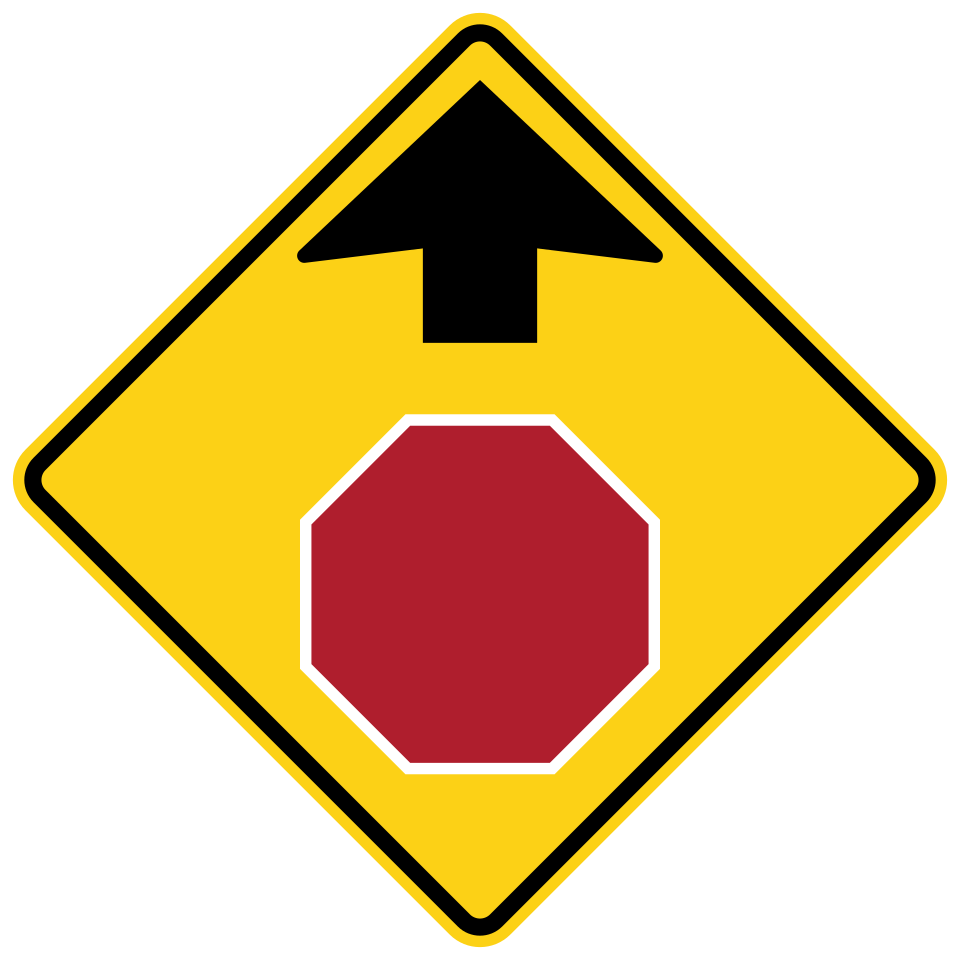
The Stop Ahead Sign: A Comprehensive Guide for Learner Drivers
For every new driver navigating the complex web of road rules, the Stop Ahead sign is a critical early warning system. Visually, this sign is distinct and impossible to miss: it is a yellow diamond-shaped sign featuring a black border. Inside the diamond, you will see a black graphic of a standard octagonal stop sign, often accompanied by the text "STOP AHEAD" or a distance marker (e.g., "500 FT"). The yellow background signifies a warning, alerting you to a potential hazard or change in road conditions ahead, while the black symbol explicitly tells you what that hazard is. Unlike the red octagon that demands an immediate halt, the yellow diamond commands your attention and prepares your mind and vehicle for a mandatory stop that is approaching but not yet at your current location. Understanding this sign is fundamental to safe driving, as it bridges the gap between free-flowing traffic and the requirement to come to a complete cessation of motion.
What it means
Formally, the Stop Ahead sign is a warning sign designed to inform drivers that a stop sign is located ahead on the roadway. Its primary function is to provide advanced notice, allowing drivers to adjust their speed and position well before they reach the intersection or the stop line. In the hierarchy of traffic control devices, this sign falls under the category of Regulatory Warning. While the stop sign itself is a regulatory device that legally mandates a stop, the Stop Ahead sign is a warning device that prepares the driver for that regulation.
The meaning is straightforward but carries significant legal and safety weight. When you see this sign, you are being told that the right-of-way rules are about to change. You are approaching an intersection, a crosswalk, or a specific point where you must yield to other traffic or pedestrians. The sign does not mean you must stop immediately; rather, it means you must begin the process of slowing down. It serves as a crucial buffer, especially in areas where visibility might be compromised by curves, hills, or heavy vegetation, ensuring that a driver does not approach a stop sign at highway speeds. Failure to heed this warning can lead to a dangerous situation where a driver is forced to slam on their brakes, potentially causing a rear-end collision or losing control of the vehicle.
Where you'll see it
The placement of the Stop Ahead sign is strategic and governed by strict guidelines to ensure maximum effectiveness. You will typically encounter this sign in locations where the stop sign is not immediately visible to approaching drivers. Common contexts include:
- Hills and Crests: If a road crests a hill, a driver cannot see the intersection at the bottom until they are very close. A Stop Ahead sign is placed on the approach to warn drivers before they crest the hill.
- Sharp Curves: On winding roads, the line of sight is restricted. If a stop sign is located just around a bend, the warning sign is placed on the straight section leading up to the curve.
- Dense Vegetation or Urban Canyons: In areas with tall trees, bushes, or tall buildings that might obscure the view of an intersection, this sign acts as a visual cue.
- High-Speed Approaches: On roads with higher speed limits (e.g., 45 mph or more), the stopping distance required is significant. The sign is placed further back to give drivers adequate time to decelerate safely.
- Intersections with Limited Visibility: If the intersection itself is obscured by parked cars, large trucks, or other obstructions, the warning sign alerts drivers to the potential need to stop even if they cannot yet see the stop sign itself.
These signs are almost always mounted on posts on the right side of the road, though in divided highways or specific urban environments, they may also appear on the left or be duplicated on both sides. The distance between the warning sign and the actual stop sign varies based on the speed limit and road geometry, but it is generally placed far enough in advance to allow a vehicle traveling at the posted speed limit to come to a smooth, controlled stop.
What to do when you see it
Upon spotting the yellow diamond with the stop symbol, your immediate reaction should be a shift in focus and a reduction in speed. Do not panic, but do not ignore it. The correct sequence of actions is as follows:
- Scan the Environment: Immediately check your mirrors and scan the road ahead. Look for the actual stop sign, but also check for pedestrians, cyclists, or other vehicles that might be approaching the intersection from the side.
- Begin Decelerating: Take your foot off the accelerator and apply gentle pressure to the brake pedal. The goal is a smooth, progressive slowdown, not a sudden jerk. This alerts drivers behind you that you are slowing down.
- Prepare to Stop: As you get closer to the intersection, ensure your vehicle is in the correct lane. If you are in a multi-lane road, do not change lanes immediately before the stop line unless necessary and safe to do so.
- Execute the Stop: When you reach the actual stop sign (or the limit line), come to a complete halt. Your vehicle must be motionless for at least a full second. Rolling stops are illegal and dangerous.
- Proceed with Caution: After stopping, check all directions for traffic. Only proceed when the way is clear and it is safe to do so.
It is vital to remember that the Stop Ahead sign is a precursor to a legal requirement. Ignoring the warning and maintaining speed until the last second is a common cause of accidents. The sign gives you the luxury of time; use it to drive defensively.
Common pitfalls
Learner drivers often make specific mistakes when encountering the Stop Ahead sign. Understanding these pitfalls can prevent accidents and failed driving tests.
Mistake 1: Confusing Warning with Command. Some new drivers see the yellow diamond and think they must stop immediately. This is incorrect. The sign warns of a stop ahead, not an immediate stop. Stopping in the middle of the road when no stop sign is yet visible can confuse other drivers and cause rear-end collisions.
Mistake 2: The "Rolling Stop" Approach. Because the sign is far away, some drivers assume they have plenty of time and do not slow down until they are right at the stop line. This results in a hard brake application, which is uncomfortable for passengers and dangerous for the vehicle's stability. It also increases the risk of being rear-ended.
Mistake 3: Ignoring the Sign Due to Distraction. The yellow diamond is distinct, but in busy urban environments, it can be overlooked if a driver is focused on a GPS or a passenger. Missing this sign means missing the preparation phase, leading to a chaotic approach to the intersection.
Mistake 4: Misjudging the Distance. Learners sometimes misjudge how far away the stop sign is. They may see the sign and think they have 1000 feet to stop, when in reality, the intersection is only 300 feet away. This leads to panic braking. Always assume the distance is shorter than it appears and begin slowing down immediately.
Permit-test context
On your written permit test, the Stop Ahead sign is a frequent subject. You will likely be asked to identify the sign from a picture or select the correct action to take when you see it. The test questions often focus on the distinction between the warning sign (yellow diamond) and the regulatory sign (red octagon).
Typical questions include: "What does a yellow diamond-shaped sign with a stop symbol mean?" "When should you begin to slow down if you see a Stop Ahead sign?" "What is the purpose of the Stop Ahead sign?" The correct answers will always emphasize that the sign is a warning to prepare for a stop, not a command to stop immediately. You must also be prepared to answer questions about the placement of the sign, such as why it is used on hills or curves. Remember, the test is designed to ensure you understand the flow of traffic and the hierarchy of signs. Knowing that the yellow diamond precedes the red octagon is a key concept in safe driving theory. If you see this sign on the test, the answer is almost always related to "slowing down" or "preparing to stop," never "stopping immediately" or "speeding up." By mastering the Stop Ahead sign, you demonstrate to the examiner (and to yourself) that you are a proactive driver who anticipates hazards rather than reacting to them at the last second. This mindset is the foundation of safe driving.