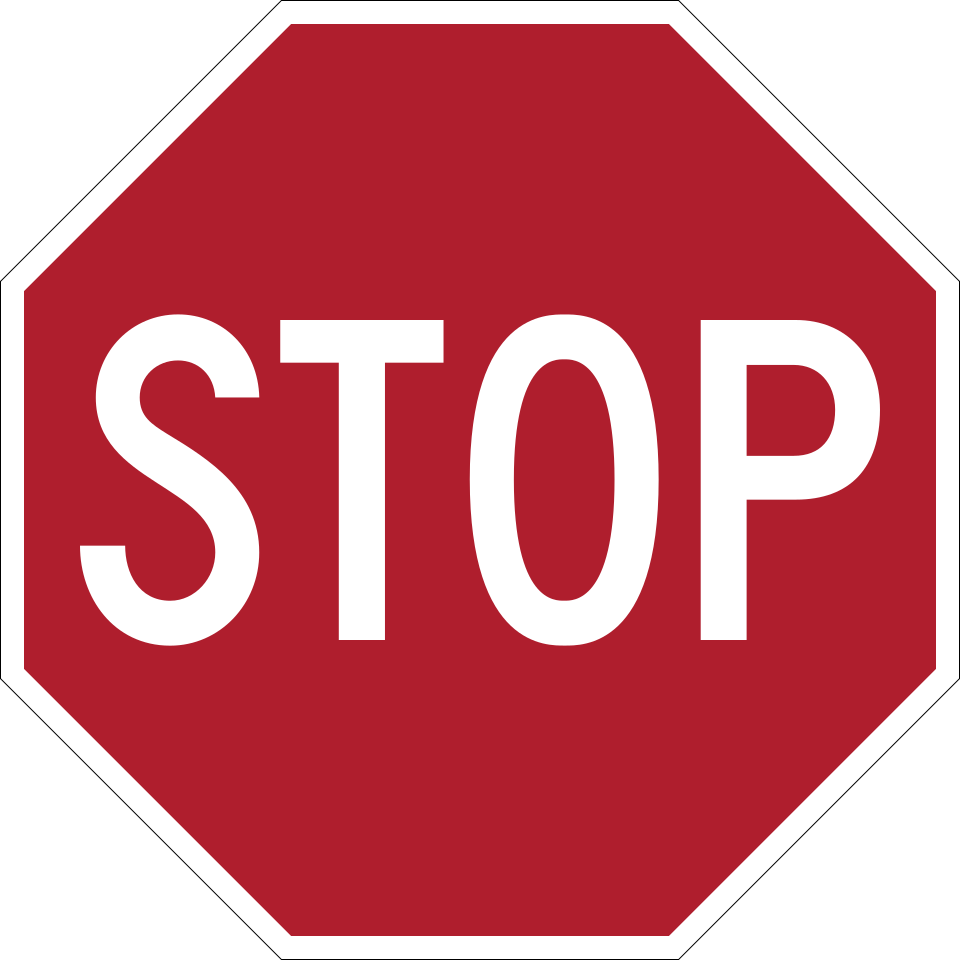
The stop sign is arguably the most recognizable and critical regulatory sign on the road. Distinguished by its unique red octagonal shape and bold white lettering, it serves as an unambiguous command to every driver who approaches it. Unlike other signs that offer warnings or guidance, the stop sign demands immediate and total compliance. Its red color signifies danger and the necessity to halt, while the octagonal shape ensures it can be identified even if the sign is obscured by snow, mud, or viewed from an angle where the text is illegible. For a learner driver, mastering the stop sign is not merely about passing a test; it is about understanding the fundamental rule of right-of-way that prevents collisions at intersections. This sign represents a non-negotiable point where the flow of traffic must pause to ensure the safety of all road users, including pedestrians and cyclists.
What It Means
According to the Manual on Uniform Traffic Control Devices (MUTCD), specifically Section 2B.04, the stop sign is a regulatory sign that requires drivers to come to a complete cessation of movement. The definition is precise: a driver must stop at a clearly marked stop line. If no stop line is present, the driver must stop before entering the crosswalk on the near side of the intersection. In the absence of both a stop line and a crosswalk, the driver must stop at the point nearest the intersecting roadway where they have a clear view of approaching traffic before entering the intersection.
The core meaning of this sign extends beyond simply slowing down. It mandates a "complete stop," which means the vehicle's wheels must cease all rotation. A "rolling stop," where the car slows significantly but continues to creep forward, is a violation of the law and a dangerous habit. Furthermore, the sign implies a duty to yield. After stopping, the driver must yield the right-of-way to any vehicles or pedestrians already in the intersection or approaching so closely as to constitute an immediate hazard. Only when the way is clear may the driver proceed. This regulatory requirement is absolute; there are no exceptions for being in a hurry, having an empty road, or believing that no one is watching.
Where You'll See It
Stop signs are strategically placed at intersections where traffic control is necessary to prevent accidents and manage the flow of vehicles. You will most commonly encounter them at four-way intersections where traffic volumes are relatively low, making a traffic signal unnecessary or impractical. They are also frequently found at T-intersections, where the terminating road must yield to the through traffic on the cross street. In residential neighborhoods, stop signs are often used to calm traffic and protect pedestrians, particularly near schools, parks, and playgrounds.
Additionally, stop signs are standard at the exit of private driveways, parking lots, and alleyways where they intersect with public roadways. In some jurisdictions, they may be placed at the entrance of a highway from a ramp if the ramp does not have a merging lane. The MUTCD guidelines emphasize that stop signs should not be overused. Because they require drivers to stop frequently, excessive use can lead to driver frustration and a tendency to ignore the sign. Therefore, they are typically reserved for locations where engineering studies have determined that a stop is necessary to ensure safety, such as at intersections with limited visibility or where the speed of approaching traffic is high.
What to Do When You See It
When approaching a stop sign, a learner driver must execute a specific sequence of actions known as the "Stop, Look, and Go" procedure. First, begin slowing down well in advance of the sign. Do not wait until the last second to brake, as this can surprise drivers behind you and may result in a failure to stop completely. As you approach the marked stop line, crosswalk, or the edge of the intersection, bring your vehicle to a full and complete halt. Your speedometer should read zero, and you should feel the vehicle settle.
Once stopped, keep your foot firmly on the brake pedal. This signals to other drivers and pedestrians that you are stopped. Next, perform a thorough visual scan. Look left, right, and left again to check for cross traffic. Do not forget to check for pedestrians in crosswalks and cyclists who may be approaching from either direction. If you are at a four-way stop, you must also check for other vehicles that arrived at the same time as you; the general rule is that the first vehicle to stop is the first to go. If two vehicles arrive simultaneously, the vehicle on the right has the right-of-way. After confirming that the intersection is clear and it is safe to proceed, release the brake, check your mirrors, and accelerate smoothly into the intersection. Always maintain awareness even after you have the right-of-way, as other drivers may make errors.
Common Pitfalls
Learner drivers frequently make several critical errors when encountering stop signs. The most common mistake is the "rolling stop." This occurs when a driver slows down but fails to bring the vehicle to a complete halt before proceeding. This is illegal and dangerous because it reduces the driver's ability to observe the intersection fully and can lead to side-impact collisions. Another common error is stopping in the wrong place. Some drivers stop short of the line, failing to see pedestrians, while others overshoot the line, blocking the crosswalk or entering the intersection before stopping. Both actions violate the MUTCD standards and compromise safety.
Additionally, learners often struggle with the concept of right-of-way at four-way stops. Confusion arises when multiple cars arrive at the same time, leading to hesitation or, worse, both drivers attempting to proceed simultaneously. Another pitfall is failing to look in all directions. Drivers may focus so intently on the car to their left that they neglect to check for a cyclist approaching from the right or a pedestrian stepping off the curb. Finally, some drivers treat stop signs as yield signs, assuming that if no cars are immediately visible, they do not need to stop. This is a dangerous misconception; the stop sign requires a stop regardless of traffic conditions.
Permit-Test Context
On the written permit test, questions regarding the stop sign are designed to verify that you understand both the legal definition and the practical application of the sign. You may be asked to identify the shape and color of the sign, with the correct answer being an octagon and red. More complex questions will present scenarios, such as "What should you do if you arrive at a four-way stop at the same time as another vehicle?" The correct answer relies on the right-of-way rules: yield to the vehicle on the right. You might also be tested on the specific location where you must stop, with options including "at the stop line," "before the crosswalk," or "at the point where you have a clear view of traffic."
Examiners also look for your understanding of the consequences of failing to stop. Questions may ask about the definition of a complete stop versus a rolling stop, emphasizing that a complete stop means the vehicle's wheels must stop turning. It is crucial to memorize the MUTCD guidelines regarding the order of stopping and proceeding, as these are standard questions on the exam. Remember, the test is not just about recognizing the sign; it is about demonstrating that you know exactly how to behave when you see it. Mastery of the stop sign is a foundational skill that will be evaluated rigorously during both the written and driving portions of your licensing exam.