What it means
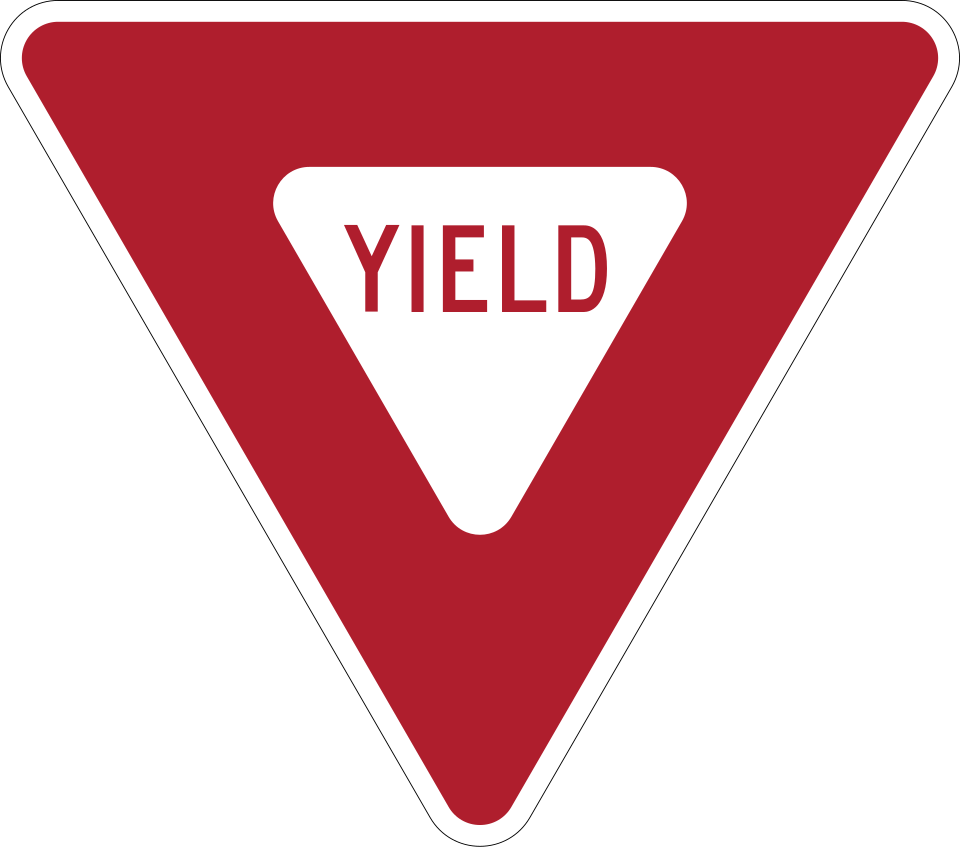
The downward-pointing red-and-white triangular yield sign requires drivers to slow down and give the right-of-way to traffic already in the intersection or on the roadway they are entering. Unlike a stop sign, you do not always have to come to a complete stop — but you must yield to any vehicle or pedestrian that has the right-of-way.
Where you'll see it
At roundabout entries, highway on-ramps merging with through traffic, T-intersections where a minor road meets a major road, and pedestrian crosswalk approaches. Yield signs are also common at bicycle and pedestrian paths that cross vehicle lanes.
What to do
Slow down and assess whether the intersection is clear. If traffic is approaching, stop and wait until it is safe to proceed. If the way is clear, you may continue without stopping. Always scan for pedestrians and cyclists who may not be immediately visible.
Common mistakes
Failing to slow adequately before a yield sign is a frequent cause of intersection collisions. Treat a yield sign with the same caution as a stop sign whenever cross-traffic or pedestrians are present.