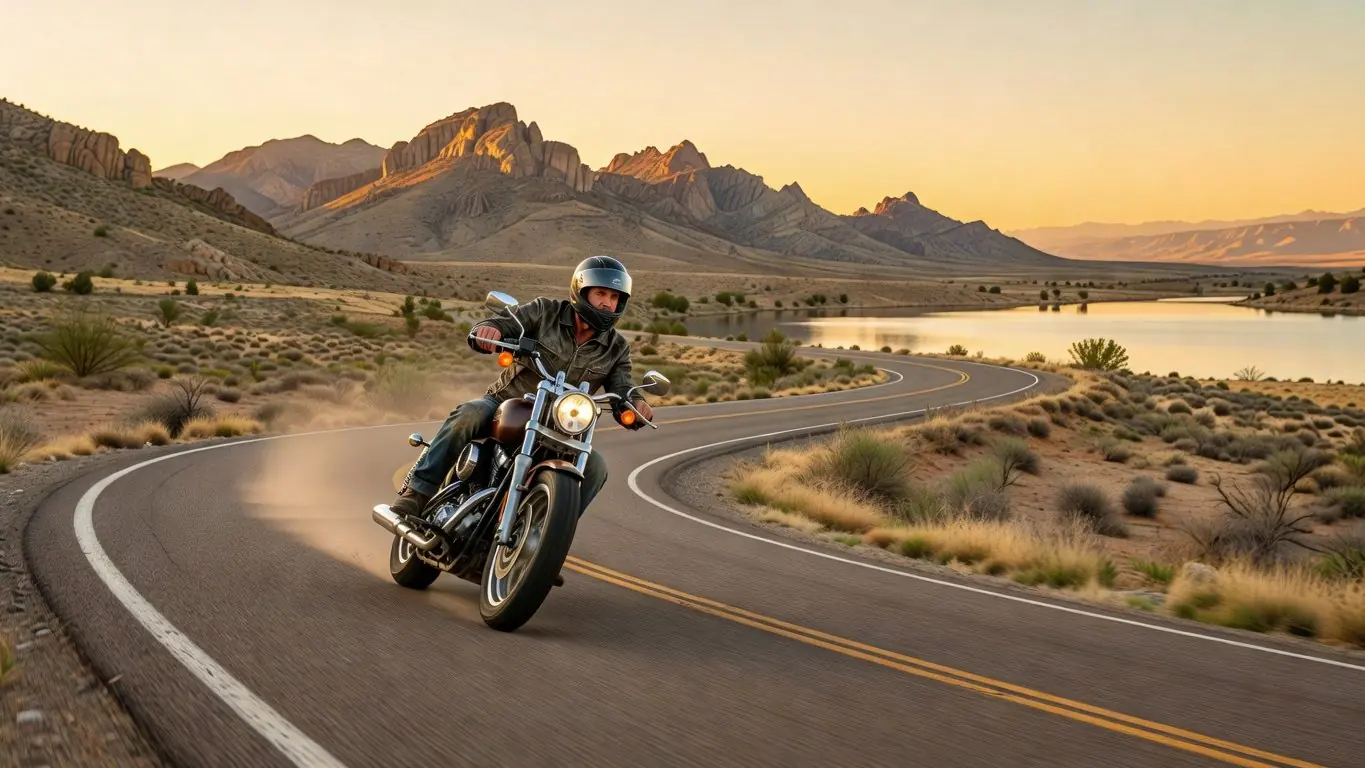
To obtain a motorcycle permit in Nevada, you must pass a written knowledge test consisting of 25 multiple-choice questions, achieving a passing score of at least 20 correct answers (80%). The minimum age to apply is 16, and the permit is valid for 365 days. While the written test has no fixed time limit, applicants must eventually complete a mandatory skills test to upgrade to a full motorcycle endorsement.
What's on the Nevada motorcycle test
The Nevada motorcycle knowledge test is designed to evaluate a rider's understanding of traffic laws, safe riding practices, and the unique dynamics of operating a two-wheeled vehicle. The examination consists of exactly 25 multiple-choice questions. These questions cover a broad spectrum of topics found in the official motorcycle operator manual, including right-of-way rules, proper signaling, lane positioning, and the effects of alcohol and drugs on riding ability. A significant portion of the test focuses on hazard perception, requiring candidates to identify potential dangers in various road conditions such as wet pavement, gravel, or construction zones. Additionally, the test assesses knowledge of mechanical safety checks, such as inspecting tires, brakes, lights, and mirrors before every ride. Because the questions are multiple-choice, candidates must carefully read each option to distinguish between similar-sounding but legally distinct answers. The content is derived from federal guidelines established by the American Association of Motor Vehicle Administrators (AAMVA) and the National Highway Traffic Safety Administration (NHTSA), which emphasize that proper education is the primary method for reducing motorcycle crashes. Understanding the specific phrasing of Nevada traffic statutes is crucial, as the test often mirrors the exact language used in state law regarding speed limits, passing zones, and helmet requirements.
Eligibility and permit duration
Applicants seeking a motorcycle permit in Nevada must meet specific age and residency requirements. The minimum age to apply for a motorcycle permit is 16 years old. For applicants under the age of 18, parental or guardian consent is typically required, and they may be subject to additional restrictions regarding night riding or passenger transport until they obtain their full endorsement. Once the written test is passed and the necessary fees are paid, the motorcycle permit is issued. This permit is valid for a period of 365 days from the date of issuance. During this one-year window, the permit holder is authorized to operate a motorcycle on public roads but must adhere to strict limitations, such as riding only during daylight hours and without passengers, unless specific exceptions apply. It is important to note that the permit does not grant full riding privileges; it is a provisional license intended to allow new riders to gain experience under controlled conditions. If the permit expires before the rider completes the required skills test and obtains the full endorsement, the applicant must restart the process, including retaking the written knowledge test. The 365-day validity period is designed to provide ample time for riders to practice safely and schedule their skills evaluation, but it also serves as a deadline to ensure that riders progress to full licensure or re-evaluate their commitment to safe riding practices.
Required gear and helmet laws
Nevada law mandates specific safety gear for all motorcycle operators and passengers, with a primary focus on head protection. While the state has specific exemptions for riders over a certain age or those with specific insurance coverage, the general rule and the safest practice emphasized in the AAMVA guidelines is the use of a Department of Transportation (DOT) compliant helmet. The test will likely include questions regarding the proper fit and certification standards of helmets. Beyond headgear, eye protection is mandatory unless the motorcycle is equipped with a windscreen that meets specific height and impact resistance standards. This is to prevent debris, insects, and weather elements from impairing the rider's vision, which is a leading cause of accidents. The handbook also stresses the importance of protective clothing, including long-sleeved shirts, long pants, and over-the-ankle boots, to protect against abrasions in the event of a slide. Gloves are highly recommended to improve grip and protect hands. The test may ask about the consequences of riding without these items, not just in terms of legal penalties but in terms of injury severity. Statistics cited in federal guidelines indicate that riders without proper gear suffer significantly higher rates of fatal and non-fatal injuries. Therefore, the knowledge test serves as a checkpoint to ensure that new riders understand that safety gear is not optional but a critical component of responsible motorcycling.
From permit to Motorcycle endorsement endorsement
Transitioning from a motorcycle permit to a full motorcycle endorsement involves a multi-step process that ensures the rider has both the theoretical knowledge and the practical skills to operate a motorcycle safely. After holding the permit for a sufficient period and gaining experience, the rider must schedule and pass a motorcycle skills test. This test is required and cannot be waived, even if the rider has prior experience. The skills test evaluates the rider's ability to perform basic maneuvers such as starting and stopping, turning, swerving, and braking effectively. Examiners look for smooth control, proper body positioning, and the ability to scan the environment while executing these tasks. The test is conducted in a controlled environment, often a parking lot or a designated testing area, to minimize external variables. Once the skills test is passed, the rider must return to the DMV to pay the endorsement fee and have their license updated. The full endorsement removes the restrictions associated with the permit, allowing the rider to carry passengers, ride at night, and operate on highways. It is crucial to note that the endorsement is specific to motorcycles; it does not automatically apply to other vehicle classes. The process is designed to be rigorous, reflecting the high stakes of motorcycle operation where rider error can lead to severe consequences. The AAMVA guidelines highlight that structured training and testing are the most effective ways to reduce the number of unlicensed riders involved in fatal crashes, a statistic that has risen dramatically in recent years.
Common pitfalls
Many applicants fail the Nevada motorcycle permit test due to avoidable mistakes. One of the most common pitfalls is underestimating the importance of the specific wording in the questions. The test often includes distractors that are partially correct but not the best answer according to Nevada law. For instance, a question might ask about the correct action in a blind curve, where the tempting answer is to speed up to get through quickly, while the correct answer is to slow down and stay to the right. Another frequent error is neglecting to study the sections on mechanical safety and pre-ride inspections. Candidates often focus solely on traffic laws and forget that a significant portion of the test covers checking tire pressure, brake fluid levels, and chain tension. Additionally, some riders assume that their experience driving cars translates directly to motorcycles, leading to misconceptions about right-of-way and lane positioning. The test will challenge these assumptions by presenting scenarios where car rules do not apply to bikes. Finally, failing to prepare for the skills test is a major pitfall. Some permit holders wait until the last minute to practice, only to find that they cannot perform the required maneuvers within the 365-day permit window. Consistent practice and a thorough review of the handbook are essential to avoid these pitfalls and ensure a smooth transition to full licensure.
How to study in 5 days
Preparing for the Nevada motorcycle permit test in just five days requires a focused and strategic approach. On Day 1, read the entire motorcycle operator handbook from cover to cover, paying special attention to the sections on traffic laws and safety gear. Take notes on key statistics and rules that seem counterintuitive. On Day 2, focus on hazard perception and road signs. Use online practice tests to simulate the exam environment, aiming to answer 25 questions in one sitting. Review every incorrect answer to understand why it was wrong. On Day 3, dedicate time to mechanical safety and pre-ride inspections. Memorize the checklist for tires, brakes, lights, and controls. On Day 4, review the specific laws regarding passengers, night riding, and helmet requirements, as these are frequent test topics. Re-take practice tests, aiming for a score of at least 22 out of 25 to build a safety margin. On Day 5, do a final review of all notes and take one last practice test to gauge readiness. Ensure you are well-rested and arrive at the testing center early. This intensive schedule covers all the necessary ground, from federal safety guidelines to state-specific regulations, ensuring you are prepared to pass the 25-question exam with the required 80% score.